Parking enforcement procedures for security officers
Parking enforcement procedures for security officers: where your authority ends, warnings and citations that survive appeal, tow rules and accessible spaces.

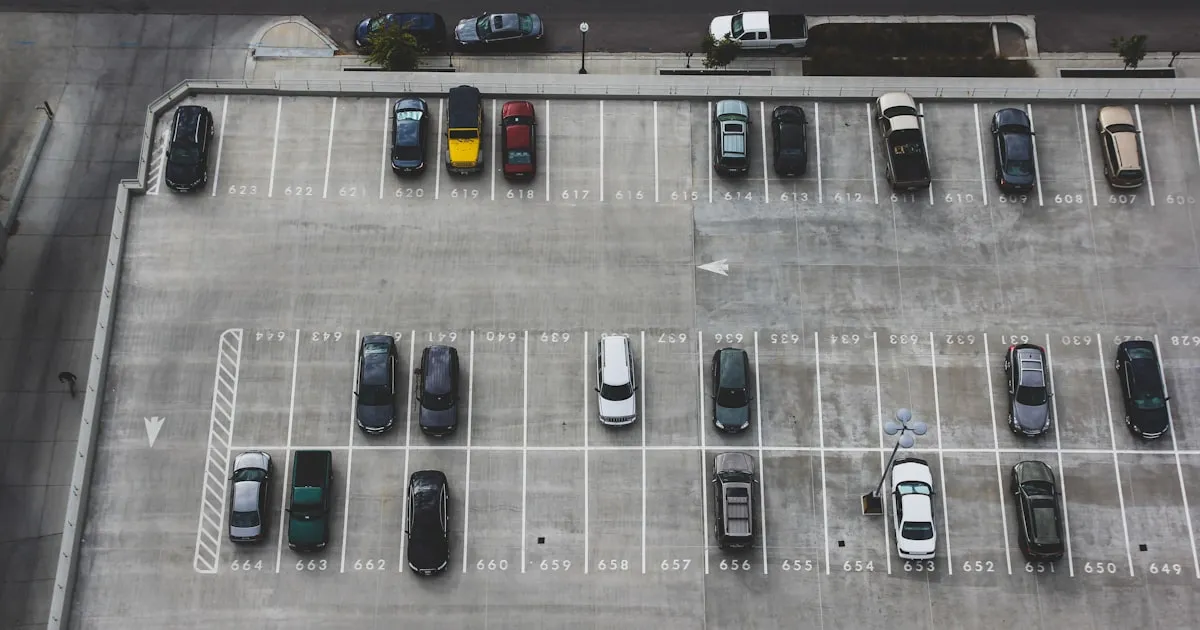
Nobody argues with a guard about a locked door. They argue about parking. It is the one action where an officer stands between a person and their car, in public, enforcing somebody else's rules. Written parking enforcement procedures keep that from becoming a claim.
Security enforces parking on private property only, under authority the property owner delegated, and only where signage says so. Warn on minor first offenses, cite when the signage is clear, and reserve towing for fire lanes, blocked access and abandonment. Towing is set by state statute, not by your contract, so read your own state's law before the first tow.
What authority does a security officer actually have here?
Less than most drivers assume, and less than some officers act like. The authority is delegated, not inherent.
- Private property only. Public streets, alleys and rights of way belong to law enforcement or the municipal parking authority. If the curb is city curb, you are a witness rather than an enforcer.
- It comes from the property owner. Your right to cite or tow exists because the owner or manager granted it in the contract. What the contract does not grant, you do not have.
- Signage is the precondition. Rules that are not posted are, in most states, unenforceable against a driver who had no way to know them.
- Consistency is the defense. Cite one tenant's guest and wave through another's and the next driver has a fairness argument that lands on your client's desk.
All four belong in writing, per site, before anyone walks a lot. Post orders that actually work covers recording the delegation so a new officer inherits it.
Which violations get a warning and which get a tow?
Grade the response to the risk, not the annoyance. A guest in the wrong space is paperwork. A car in the fire lane is life safety.
| Violation | Typical response |
|---|---|
| No permit, unauthorized area | Warning, then citation, then tow |
| Fire lane | Immediate citation, tow if unattended |
| Accessible space or access aisle, no placard | Citation, plus a law enforcement referral where state law reserves it for sworn officers |
| Reserved or assigned space | Warning, then citation, then tow |
| Blocking access, egress or another vehicle | Immediate tow if unattended |
| Expired meter or time limit | Warning, then citation |
| Abandoned vehicle | Notice, then tow after the statutory hold period |
Warn on a first minor violation, for someone still learning the lot, or where signage in that corner is genuinely unclear. Beyond that, warnings stop meaning anything.
How do you write a warning and a citation that survive an appeal?
Assume every citation will be disputed, and that half go to your client rather than to you. Build the file at the time of issue.
- Verify the signage first. Stand where the driver stood. If the rule is not visible from there, you do not have a citation.
- Document the vehicle. Make, model, year, color, plate with state, and the specific space or area.
- Photograph three things. The plate, the vehicle in context showing the violation, and the sign that governs it.
- Complete the notice. Date, time, location, violation type, where they should have parked, the fine if there is one, and the appeal process.
- Place it under the driver's side wiper and enter it in the tracking record before end of shift.
The photo of the sign is the one officers skip and the one that wins appeals. A picture of the car proves it was there. A picture of the sign proves the driver could see the rule.
Step five is where paper systems fail. The officer who issued the warning is off shift when the same plate comes back. Logging warnings to a shared record with the photo attached is what makes escalation possible, the same argument made in moving field reporting off paper.
When can you tow a vehicle off private property?
Towing is governed by state statute, not by your parking policy, and the statutes differ. Build your state's requirements into the site procedure before the first tow, not after the first complaint.
California's Vehicle Code section 22658 shows how specific these rules get. It binds nobody outside California, but the categories it covers are the categories your state's statute will cover too.
What California requires of a private-property tow
- A sign at each entrance, not less than 17 by 22 inches with lettering not less than one inch, prohibiting public parking and listing the local traffic law enforcement agency's number
- Where the tow rests on a citation rather than on signage, 96 hours must elapse since the notice of parking violation was issued
- The local traffic law enforcement agency must be notified within one hour after the tow is authorized
- If the driver returns before the vehicle has left the property and is in transit, the towing company must release it immediately and unconditionally. Failing to do so is a misdemeanor
- Where the vehicle is already coupled to the truck, the charge is capped at half the regular towing charge
- Fail to meet the sign, notice or notification requirements and the party who caused the removal is liable for double the towing and storage charges
The release rule is the one officers get wrong on the pavement. Stop arguing, point the driver at the tow operator, note the time.
- Try to reach the owner first. A page over the PA costs nothing and defuses most of these.
- Photograph the vehicle, the violation and the governing sign.
- Call the approved tow company and complete whatever authorization your state requires.
- Stay until the truck arrives, be present for the hookup where your state requires a witness, and watch the operator document existing damage.
- Take the receipt with the company name, the storage location and the authorization number, then log all of it.
How do you handle the driver who comes back angry?
"I was only gone a minute." "I didn't see the sign." "I'm a tenant." "You have no authority." None of them are questions. They are pressure, and your job is to absorb it without adding any.
- Drop your volume as they raise theirs. It works more often than it has any right to.
- Let them finish. Interrupting resets the conversation to the beginning.
- Acknowledge the feeling, not the claim. "I understand this is frustrating" costs nothing and concedes nothing.
- Explain the reason instead of defending the rule. "The fire lane has to stay clear for the engine" is a fact. "Those are the rules" is an invitation.
- Give them somewhere to go. The appeal process is the exit ramp. Point at it, then stop. Repeating the same sentence is a complete ending.
Call for backup when the person turns threatening, blocks the citation or the tow, appears intoxicated or in crisis, when a crowd forms, or any time you simply do not like it. That last one is reason enough. Where the threshold sits and who answers belongs in your escalation matrix.
What not to do: argue the merits, grant an exception you were not authorized to grant, touch the person or the car, swear, threaten, or block their vehicle with yours. The last one turns a parking dispute into a false imprisonment claim.
The complaint usually reaches the client before it reaches you. Handling client complaints covers what to do once it lands.
How do you enforce accessible parking without getting it wrong?
Accessible parking violations are often a matter of state or local law rather than property rules, and some jurisdictions reserve those citations for sworn officers. Confirm what your state allows before you write the first one.
Officers routinely enforce only half of the federal side. Under the ADA rules for accessible parking spaces, the striped area beside the space is an access aisle, not decoration. It has to be the same length as the space and marked to discourage parking in it. The car straddling the hatch marks has committed the same functional violation as the car in the space.
ADA.gov also publishes the number of accessible spaces required by lot size, which matters when you assess a property rather than patrol it. That belongs in a physical security audit.
When is a vehicle actually abandoned?
Abandonment has a legal definition in your state, and it is rarely "it has been there a while." The physical tells are consistent, though.
- Flat tires, thick dust, pollen or leaf accumulation
- Registration expired by years rather than months
- The same position, to the inch, for a week or more
- Damage of the kind vehicles collect while sitting still
- No response to a notice already placed
The procedure is a hold period with a paper trail. Document the vehicle and its position, try to identify the owner from the plate, place the abandonment notice with the removal date on it, photograph the notice on the glass, then tow once the statutory period has run.
The clock is shorter than people expect for a wreck. In California a vehicle on private property missing an engine, transmission, wheels, tires, doors or windshield can be removed 24 hours after the local traffic law enforcement agency has been notified. Your state sets its own.
Log every step into the record your shift report draws from, so the timeline can be reconstructed months later, the discipline described in writing incident reports people actually read.
Key Takeaways
- Your authority is delegated by the owner and stops at the property line. Signage is a precondition.
- Grade the response to the risk. Fire lanes and blocked egress skip the warning stage.
- Photograph the plate, the violation and the sign. The sign photo is what wins appeals.
- Towing is state statute. Find your state's equivalent of California Vehicle Code 22658 first.
- The access aisle is protected under the ADA, and never ask about a person's disability.
Continue Reading
Key control policy template for security teams
A key control policy template covering master key hierarchy, issuance records, card and code rules, lost-key response, key recovery and audit frequency.

Visitor management SOP template for security teams
A visitor management SOP template covering pre-registration, ID verification, badge rules, escorts and the departure step where most visitor logs fail.
Daily activity report template for security guards
A daily activity report template for security guards: header, patrol log, incident log, maintenance notes, and a full sample DAR you can copy.