Security escalation matrix template: who to call
A security escalation matrix template with four severity levels, notification times, named backups and call sequences for medical, fire and active threat.

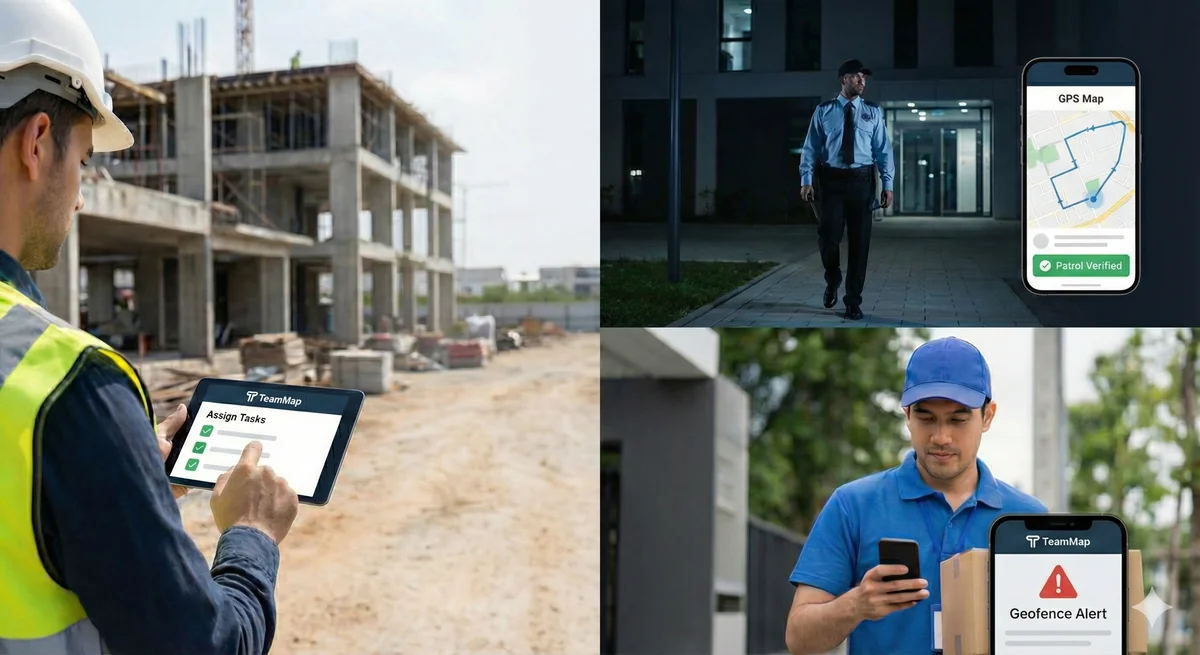
At 2:14am a guard finds a forced door at a client's warehouse. He knows what he is looking at. He does not know who to wake, or which of the two numbers on the post order still works. A security escalation matrix removes that hesitation.
An escalation matrix is one page saying, for each severity level, who gets told, how fast, by what method, and who to try when the first person does not answer. Build it around four levels, put a named backup behind every primary, and rehearse the paths. The times below are a starting template. Set yours against what your client contract promises.
Nothing in this template overrides your post orders, your client's own emergency plan, or the law where you operate. Call 911 first for anything life-threatening. Everything after that is sequencing.
How should severity levels be defined?
The definitions have to be usable by a guard at 2am with adrenaline up. Write them so the level is obvious from the incident, not from a judgment call.
| Level | Definition | Examples |
|---|---|---|
| Critical (1) | Immediate threat to life, major property damage, or significant business disruption | Active threat, fire, bomb threat, serious injury, major theft in progress |
| High (2) | Security breach needing immediate response, with room to get worse | Unauthorized entry to a secure area, aggressive individual, significant vandalism, utility failure |
| Medium (3) | Needs prompt attention, no immediate threat | Suspicious activity, minor theft discovered, parking disputes, non-violent trespasser |
| Low (4) | Routine, needs documenting and follow-up | Lost property, visitor complaints, minor policy violations, maintenance issues |
The line that causes the most trouble in practice is between High and Medium. Settle it with a rule rather than adjectives: if leaving it alone for an hour could make it worse, it is High.
How fast does each level have to move?
These are the intervals operators commonly write into a matrix. Treat them as a default you then reconcile against your service agreement, because a contract that promises a 30-minute callback and a matrix that says one hour is a dispute waiting to happen.
| Severity | Initial response | Supervisor notified | Management notified |
|---|---|---|---|
| Critical | Immediate | Within 5 minutes | Within 15 minutes |
| High | Within 5 minutes | Within 15 minutes | Within 1 hour |
| Medium | Within 15 minutes | Within 1 hour | End of shift or next business day |
| Low | Within 30 minutes | Daily summary | Weekly report |
Whatever numbers you land on, they need to match what you sold. Pull the response-time language out of your service agreement and put it side by side with this table before you publish either.
Who gets called, in what order?
Critical incidents (Level 1)
FIRST: call 911 for anything life-threatening. Nothing in the chain below happens before that call.
| Order | Contact | Method | Backup |
|---|---|---|---|
| 1 | Security dispatch | Radio channel 1 | Phone: [number] |
| 2 | Security supervisor | Phone or radio | [backup supervisor] |
| 3 | Security director | Phone | [assistant director] |
| 4 | Facility manager | Phone | [backup FM] |
| 5 | Client contact (contract sites) | Phone | [secondary contact] |
| 6 | Executive management | Phone | [per protocol] |
Order matters less than the backups. A matrix with six primaries and no alternates fails the first time someone is on a plane. Every row gets a second name.
High severity (Level 2)
| Order | Contact | Method | When |
|---|---|---|---|
| 1 | Security dispatch | Radio | Immediately |
| 2 | Security supervisor | Phone or radio | Within 15 min |
| 3 | Security director | Phone or email | Within 1 hour |
| 4 | Facility manager | Phone or email | Within 1 hour, business hours |
Medium severity (Level 3)
| Order | Contact | Method | When |
|---|---|---|---|
| 1 | Security dispatch | Radio or app | Within 15 min |
| 2 | Security supervisor | Email or app | Within 1 hour |
| 3 | Security director | End of shift |
Low severity (Level 4)
| Contact | Method | When |
|---|---|---|
| Log the entry | Daily activity report | Within shift |
| Security supervisor | Daily summary | Next business day |
Level 4 is where matrices quietly rot. Nobody escalates, so nobody checks whether the log entry was written, and six months later a pattern of small thefts turns out to have been visible the whole time. The discipline is in writing the entry properly, not in the call.
What are the incident-specific sequences?
Medical emergency
- Call 911.
- Radio dispatch for the AED and additional officers.
- Notify the supervisor.
- Send an officer to meet EMS at the entrance. This is the step that gets skipped, and it costs minutes at the door.
- Notify the facility manager if it is business hours.
- Family notification follows the client's policy. On most contracts it is not the guard's call.
For a suspected poisoning or chemical exposure, Poison Control is free and confidential at 1-800-222-1222. Put the number on the post order, not just in a binder.
Fire or evacuation
- Pull the alarm, call 911.
- Radio dispatch and all units.
- Begin evacuation per the site plan.
- Notify the supervisor and director.
- Notify the facility manager.
- Hand off to the fire department incident commander on arrival, with a headcount and the location of anyone unaccounted for.
That last step is where a private security team either helps or gets in the way. Knowing how the command structure works before you are standing in it is the point of learning ICS as a security team.
Active threat
- Call 911. Give location, description, weapon type.
- Radio dispatch with your site's code and the location.
- Implement lockdown if the site has one.
- Direct people away from the threat.
- Supervisor and director notified immediately.
- Meet law enforcement and hand over what you know, including camera locations.
This is the one sequence you should train rather than distribute. CISA publishes free active shooter preparedness training and resources, and running the site's plan against them once a year is cheap.
Theft or burglary, discovered
- Secure the scene. Touch nothing.
- Radio dispatch.
- Call police for a report number.
- Notify the supervisor.
- Notify the security director and the client.
- Preserve the video before the recorder overwrites it. Most systems loop in days, not weeks, and this step has a deadline nobody puts on the sheet.
What contacts belong on the sheet?
Print this filled in, laminate it, and put a copy at every post. The version on a shared drive is the version nobody can reach when the network is the thing that failed.
| Category | Contact | Number |
|---|---|---|
| Emergency | Police, fire, EMS | 911 |
| Emergency | Police non-emergency | [local number] |
| Emergency | Fire non-emergency | [local number] |
| Emergency | Poison Control | 1-800-222-1222 |
| Chain of command | Dispatch | [radio channel and phone] |
| Chain of command | Shift supervisor | [name and number] |
| Chain of command | Security director | [name and number] |
| Chain of command | Director backup | [name and number] |
| Facility | Facility manager | [name and number] |
| Facility | Building engineer | [name and number] |
| Facility | After-hours maintenance | [number] |
| Utilities | Electric | [number] |
| Utilities | Gas | [number] |
| Utilities | Water | [number] |
| Client | Primary | [name and number] |
| Client | Secondary | [name and number] |
| Client | After-hours | [number] |
Which channel for which message?
| Method | Use for | Why |
|---|---|---|
| Radio | Immediate tactical traffic | Instant, and everyone on the channel hears it |
| Phone call | Direct notification, anything sensitive | Confirms receipt and allows questions |
| Text | Quick notice at low urgency | Written record, does not interrupt |
| Detail, attachments, documentation | Audit trail | |
| App notification | Routine updates and shift information | Logged and timestamped automatically |
One rule overrides the table: a Critical notification is not delivered until a human acknowledges it. A text nobody read is not a notification, and "I sent it" is not a defense when the client asks why they found out at 8am.
How do you keep the matrix from going stale?
A matrix is one artifact in a larger set. If you are building the rest, the incident response playbook covers what happens after the call connects, and the emergency quick reference is what actually goes in the guard's pocket.
Key Takeaways
- Four severity levels, defined so a guard can pick one under stress, not by adjectives.
- Response times in the matrix must match the response times in the client contract.
- Every primary contact gets a named backup. Chains without alternates fail on the first vacation.
- A Critical notification is not complete until someone acknowledges it.
- Dial the after-hours numbers once a year. Stale numbers are the usual failure.
Continue Reading
Site security assessment checklist: 101 points
A 101-point site security assessment checklist covering perimeter, access control, cameras, fire safety and operations, plus how to rank what you find.
Emergency response quick reference for guards
An emergency response card for the post: decision trees for medical calls, fire, active threats, suspicious packages and weather, each linked to its source.
Incident response playbook template for guards
An incident response playbook template for security teams: the five-step spine plus ready steps for medical calls, trespass, theft and fire evacuation.