Incident command system for security teams
The incident command system gives a guard force one commander, named roles and a shared vocabulary with the fire and police crews who show up.

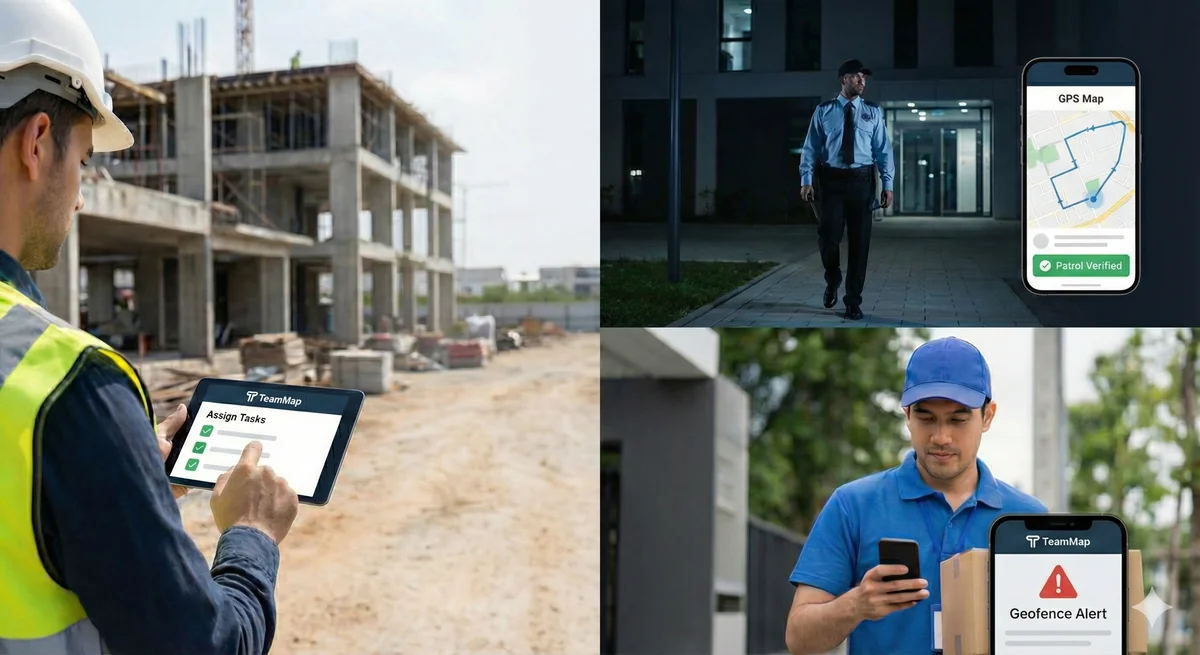
An active threat, a building evacuation, three agencies on scene. Chaos is the default. The incident command system is the structure the fire service worked out so the first ten minutes are not improvised, and a security team can borrow it without the federal paperwork.
ICS is a standard command structure for incidents: one incident commander, a supervisor for every three to seven people, and named functional sections for operations, planning, logistics and finance. Security teams use it so nobody has to invent a chain of command at 2am. Start with designated commanders, written role cards, and a rehearsed handoff to the fire department.
What is ICS?
ICS came out of wildfire response and now runs under the National Incident Management System. FEMA defines it as a management system that integrates facilities, equipment, personnel, procedures and communications inside one organizational structure. Fire, police and EMS all run it. So do the agencies your officers will be standing next to.
The five questions ICS forces you to answer
- Who is in charge?
- Who reports to whom?
- What resources do we have on scene?
- What is actually happening right now?
- What is the plan for the next twenty minutes?
Why would a security team bother?
Most of what your officers handle needs none of this. A trespass, a lockout, a minor theft, a medical call. One officer, one radio, done.
Then something escalates. A fire evacuation means coordinating with the responding department, accounting for occupants, holding access points, and briefing property management, all at once. An active threat adds lockdown, law enforcement liaison, and traffic across several teams who cannot all hear each other.
Without a framework, two officers clear the same stairwell and nobody clears the loading dock. That is the failure mode. Not panic. Duplication with a gap next to it.
What are the core concepts?
Command, single or unified
One incident commander runs a single-agency incident. When several agencies have legal authority over the same event, they form a unified command and set shared objectives together, but the orders still leave through one structure. The point is not that one person outranks everyone. The point is that nobody on the ground receives two conflicting instructions.
Manageable span of control
FEMA is specific here: an effective span of control is three to seven people, and more than seven is generally too many for one supervisor during an incident. When the incident grows, you add a supervisor. You do not hand the existing one more radios.
Functional sections
FEMA lists six functional areas: command, operations, planning, logistics, intelligence and investigations, and finance and administration. A guard force incident rarely stands all six up. It scales down cleanly, which is the useful part. Two people can run command and operations and still be running ICS.
Common terminology
Everyone uses the same word for the same thing. Command post, not headquarters. Staging area, not the spot by the loading dock. This sounds trivial until an engine company arrives and repeats your words back to you.
How do you put it into a security operation?
You do not need the full FEMA curriculum to get most of the value. Four moves cover it.
FEMA publishes the paperwork free, and it is worth copying rather than inventing. The ICS Resource Center forms library includes ICS 201 Incident Briefing and ICS 214 Activity Log, both of which map cleanly onto what a security team already writes down. The training is free too: IS-100.c, Introduction to the Incident Command System, runs about two hours with no prerequisites.
What does software actually do here?
Structure that only exists on paper collapses at minute three. Software helps in four narrow ways.
- Role assignment that everyone can see, so authority is a screen rather than a memory.
- One live status view of resources and assignments instead of a reconstruction from radio traffic.
- Separate channels for command, operations and logistics, so the logistics chatter stops burying the command traffic.
- A timestamped action log written as it happens, which is your after-action review and, later, your evidence.
No product ships an incident command system, TeamMap included. What software can hold is those four pieces: incidents carry a template, a live timeline and an alert when a response step runs past its target time; separate channels keep logistics chatter out of command traffic; the live map shows who is where; and every action lands timestamped in a record you export as a PDF afterward. The activity log comes off the same records.
Where should you start?
Pick one scenario. Fire evacuation is usually the right first choice, because it happens, the fire department will be there, and the transfer of command is the part you most need to have done once before you do it for real.
Build the procedure for that scenario. Run it as a tabletop with the actual shift, not with the managers. Then add the next scenario. A companion sheet for the routine calls lives in the emergency response quick reference, and the broader planning sits in crisis management for security companies.
Key Takeaways
- ICS gives you one commander, named roles, and a common vocabulary with the agencies who show up.
- FEMA puts effective span of control at three to seven people. Past seven, add a supervisor.
- Unified command means agencies set objectives jointly, not that orders arrive from two directions.
- Name the commander, write role cards, rehearse the handoff, and edit the document after every real incident.
- FEMA's ICS forms and IS-100.c course are free. Start there rather than writing your own.
Continue Reading

Retail loss prevention strategies that work
What the NRF shrink numbers actually say, and the floor layout, exception reporting, officer training and outside partnerships that answer retail theft.
Security escalation matrix template: who to call
A security escalation matrix template with four severity levels, notification times, named backups and call sequences for medical, fire and active threat.
Site security assessment checklist: 101 points
A 101-point site security assessment checklist covering perimeter, access control, cameras, fire safety and operations, plus how to rank what you find.