Security guard staffing shortage: what works
The guard shortage is churn, not demand. Where the pay gap comes from, when guards actually quit, and the staffing fixes that hold a roster together.


The security guard staffing shortage is not a demand story. BLS projects 1 percent growth from 2025 to 2035 and about 157,200 openings a year, mostly to replace people who leave. The trade hires that hard just to stand still.
BLS puts median guard pay at $18.29 an hour while Amazon advertises an average above $23 for warehouse work, so security is bidding for the same labor at a discount. Companies that staff reliably price against local employers, post schedules far enough ahead that a guard can plan a life, rotate the bad shifts, and build somewhere to go after two years on a gate.
Why can't security companies keep guards?
Four reasons, and they compound.
The pay gap is now published on both sides
BLS puts median security guard pay at $18.29 an hour as of May 2025. Amazon says its US fulfillment and transportation employees average more than $23 an hour in base pay, and more than $30 including benefits.
Your applicant can see both numbers on their phone. One job is indoors, has a fixed end time, and does not require a state license. The other is a gate in February at 3am with a two-hour drive between posts. Guess which one wins a coin flip.
The schedule costs more than the wage
Overnights and weekends conflict with everything else a person does: school pickup, a dentist appointment, a friend's birthday, a second job. A guard on rotating nights cannot commit to anything more than a week out.
Schedules posted on Thursday for a week starting Monday are the version of this that operators control and mostly do not fix.
Nobody sells the job as a career
Security reads as the job you take while you look for a job. That belief is self-confirming: a company that treats guards as interchangeable gets guards who treat the company the same way. Two years in with no title change and no new certification, and the person is right.
The competition got flexible
Delivery apps and gig platforms compete for exactly the workers a guard company needs, and they compete on the one dimension security is worst at. A driver decides on Tuesday morning whether to work Tuesday. Nobody staffs a post that way.
When do guards actually leave?
Almost all of it happens early. Not at eighteen months when someone gets bored, but in the first thirty days, before the guard has worked a full rotation or met a supervisor face to face.
The shape below is illustrative rather than measured, but it matches what most operators find when they finally pull their own hire dates and separation dates into one sheet. Do that before you act on anybody's chart, including this one.
Security Guard Retention Funnel
Illustrative pattern — where guards drop off in the first year (per 100 hires)
Critical period: Most turnover happens early. The first 30 days are make-or-break. Investing in onboarding, equipment, and communication tools during this window keeps more guards on the team.
Turnover "over 100 percent" gets quoted constantly in this trade. There is no authoritative published figure for guard-specific turnover, so treat the number as shorthand rather than data. The sourced version of the same point is the BLS figure at the top: 157,200 openings a year in an occupation growing 1 percent. That is churn, described politely.
What do the companies that staff reliably do differently?
They price against the employer down the street, not the national average
Competing on price with clients while competing on wage with Amazon is a trap you can only exit at the contract, not at the payroll.
Regional spread is wide, and a national figure will mislead you in both directions. What guards earn state by state has the fuller picture.
Security Guard Pay Rates by State
Illustrative state ranges against the BLS national median for May 2025
Note: The bars are illustrative, not measured state figures. The dashed line is the BLS national median of $18.29 an hour (May 2025). For your state, read the BLS state table and current job postings in your market.
Read the bars as an illustration of the spread, not as measured rates for your county. The only measured line on that chart is the dashed one: the BLS national median of $18.29 an hour from May 2025. Get your local numbers from live job postings.
They make the schedule predictable before they make it flexible
Predictability beats flexibility for most guards, and it is cheaper to provide.
- Same shift pattern week to week, so childcare and second jobs can be arranged around it
- Two weeks of posted schedule minimum, published on a fixed day
- Preference collected once and honored where the roster allows it, because a chosen overnight feels nothing like an assigned one
- Weekends and holidays rotated rather than dumped on the newest three hires
- Open shifts published to everyone eligible instead of a supervisor working down a phone list at 5am
That last one is where most callout coverage goes wrong. Reducing callouts and building a schedule that does not need constant repair are the same project.
They spend money on things the guard touches
Small things, disproportionate effect. A uniform that fits. A radio that works at the back of the property. A patrol vehicle without a broken heater. Somewhere warm to eat, and a restroom they can reach at 2am without calling anyone.
None of this shows up on a P&L line called retention. All of it shows up in whether a guard feels like staff or like inventory. Uniform standards and the kit you issue are the cheapest signals you send.
They build somewhere to go
Most guards will not become supervisors. The point is that the path exists and someone visible has walked it.
- Site lead as a real intermediate step, with a pay differential attached
- Company-paid certifications, which the guard keeps whether they stay or not
- Dispatch and operations roles for people who want to grow without supervising
- A supervisor track with named criteria rather than a tap on the shoulder
A training program is what makes the path real, and what sits alongside the wage often decides the offer.
Does technology help with staffing?
At the margin, and in specific places. It is not a retention strategy, but it removes friction that pushes people out.
Open shifts claimable from a phone cover a callout without anyone making six calls. Scheduling visibility stops the accidental sixth consecutive night. Team channels keep a guard on a lone post from feeling like they are working for nobody. And a modern set of tools quietly signals that the company is not stuck in 2004, which matters more to a 24-year-old applicant than most operators expect.
What technology does not do is make a below-market wage acceptable. Fix the wage first.
Where else can you hire from?
Widen the funnel before you widen the budget.
- Veterans
- Comfortable with structure, radio discipline and post orders. The transition is short.
- Retirees
- Frequently the most reliable people on the roster. They want steady hours, not a career ladder, which is exactly what a static post offers.
- Career changers
- People leaving restaurants, retail and warehousing often value the calm and the fixed post after years of chaos.
- Students
- Overnight shifts on quiet sites fit around class in a way daytime work does not.
Where to source and how to screen goes deeper on each of these.
What should you measure?
Four numbers. Pull them monthly and put them where the supervisors can see them.
- 90-day retention. The single most useful figure you have, because that is where the losses concentrate.
- Annual turnover by site and by supervisor. This is the one that tells you whether you have a company problem or a person problem. It is usually a person problem at two sites.
- Exit reasons, coded consistently. "Personal reasons" is not a category. Push for the real answer and count the themes.
- Time to fill. How fast you recover, and a proxy for how attractive the job looks from outside.
If you only fix one thing this quarter, fix the first thirty days. The mechanics of cutting turnover start there.
Key Takeaways
- BLS projects 1 percent growth and 157,200 openings a year, most from replacement. The shortage is churn.
- Median guard pay is $18.29 an hour against Amazon's stated $23 average. Applicants see both figures.
- Fund wage increases in the client contract, not out of margin, and price against local employers.
- Predictable, advance-posted schedules retain better than flexibility, and cost less to provide.
- No published figure covers guard turnover. Measure your own 90-day retention by site and supervisor.
Continue Reading

How to measure guard turnover in your own company
No agency publishes a guard turnover rate. Calculate your own, split it by tenure to find the ninety-day cliff, and cost one departure from your own ledger.
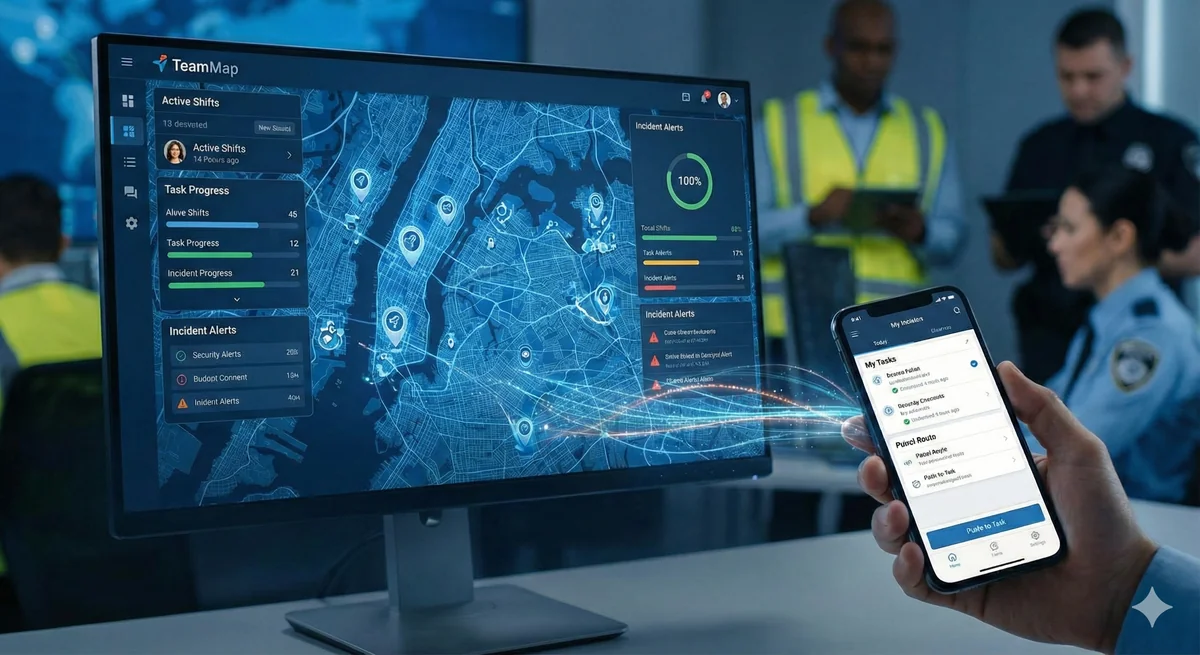
Security guard retention: the five levers
Security guard retention comes down to five levers: pay structure, schedule, supervisor, promotion rungs and the first ninety days. Pay alone will not do it.

Security guard benefits packages that retain
What belongs in a security guard benefits package, in order: health insurance, paid time off, a retirement match, and how to price each into your bill rate.