How to apply for a California guard card, step by step
The order to do it in: Power to Arrest course, Live Scan prints, the BreEZe filing, then the training that runs on the clock once you are registered.

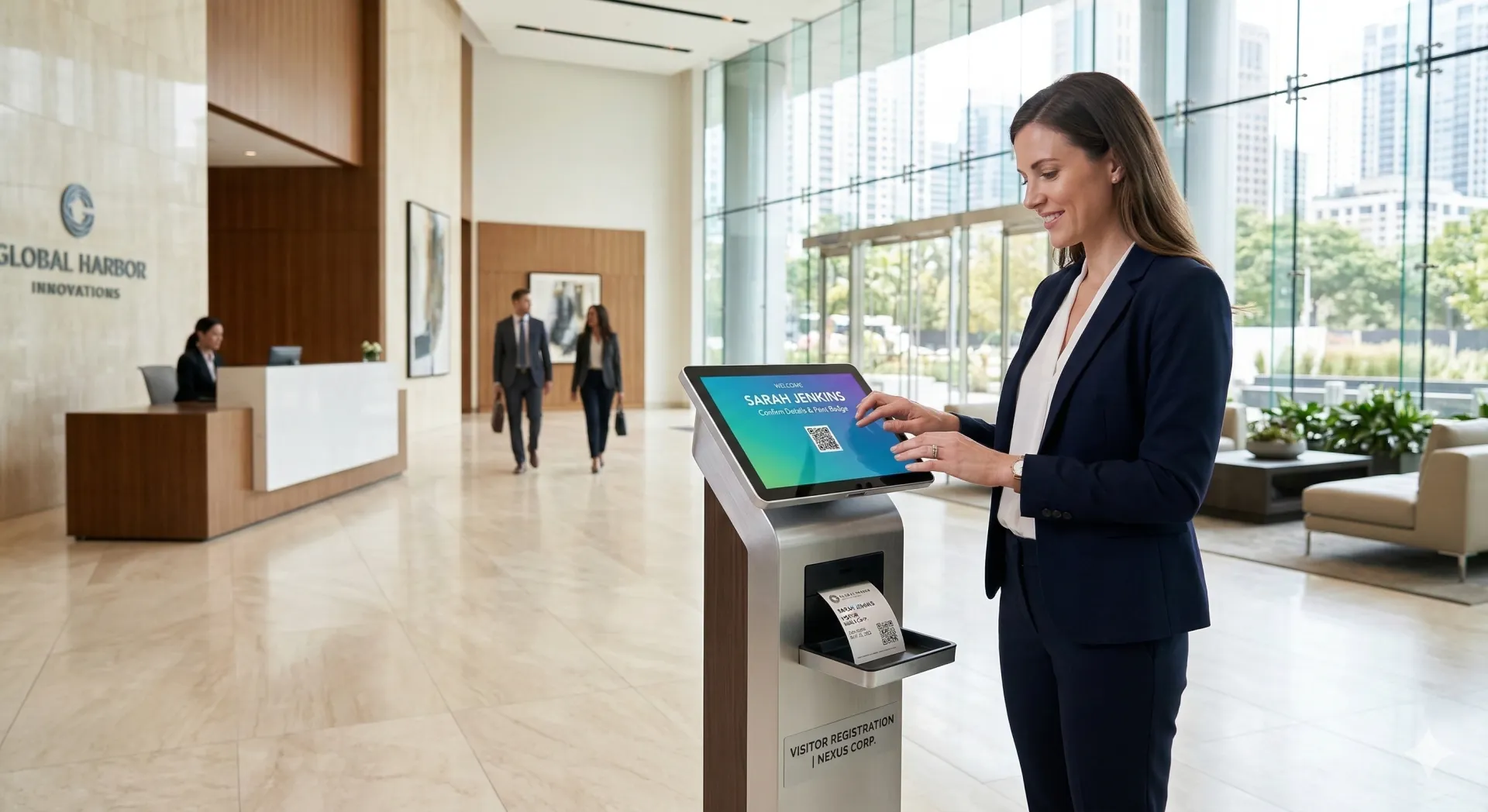
Applying for a California guard card is a sequence, and doing it out of order costs you weeks. Take the course, get fingerprinted, file, then finish the rest of the training on the clock. A company applies separately, for a Private Patrol Operator license.
The Bureau of Security and Investigative Services issues the guard card. File after the Power to Arrest and Appropriate Use of Force course, with Live Scan prints on the way. Skills training and annual hours follow once you are registered. Every dollar figure comes off the BSIS fee sheet.
Hours and deadlines below are quoted from the BSIS security guard training regulation page. Fees, bond and insurance amounts move and are not quoted here: read them off the BSIS fee sheet. For the requirement side rather than the filing, see California guard card requirements and training hours.
Who regulates it
BSIS sits inside the California Department of Consumer Affairs and covers every security worker and security company in the state. Retail floor, corporate campus, gated community, one-night event: same bureau, same credential requirement.
Working without one is not a technicality. It exposes the individual and the company that deployed them to penalties that can run past fines into criminal exposure.
The guard card, step by step
Nobody works a post in California without a valid guard card. Not for a shift, not while paperwork is pending, not as a favor.
First, the Power to Arrest course
BSIS lists this as two courses: Power to Arrest at three hours and Appropriate Use of Force at five, eight hours in total, each with an examination you have to score 100 percent on. Under Business and Professions Code sections 7583.6 and 7583.8 it has to be done before the registration is issued. If a registrant cannot hand their employer the completion certificate, they have six months from their employment date to produce it.
The content is the part of the job people get wrong in the field: what a citizen's arrest actually permits, where the power stops, what the limits are on search and seizure, and how a security officer differs from a peace officer. It exists because the expensive mistakes in this industry are almost all made in that gap.
Then the background check
Live Scan fingerprints go to the California Department of Justice and the FBI under Business and Professions Code sections 7581 and 7583.9. A conviction is not automatically disqualifying. BSIS looks at the offense, how long ago it was, and what has happened since.
File online through BreEZe rather than by post. BSIS does not publish a processing time you can plan around, so treat any number you have been quoted as an estimate and check the current status in BreEZe instead of waiting on the mail.
Then 32 hours, on the clock
The skills training is phased so people can earn while they complete it, which is the whole point of the design. The deadlines are firm.
The 32 hours, per BSIS
- Four mandatory courses totaling 16 hours
- Two of them within 30 days of the registration card being issued
- The remaining two, four hours each, within the first six months
- The full 32 hours within the first six months of registration
- If certificates cannot be produced to the employing operator: 16 hours within 30 days of the employment date, the rest inside six months
Training has to come from a BSIS-approved facility and instructor. Plenty of employers run their own approved program, which is usually cheaper and lets the curriculum carry the company's own procedures. Building a training program covers what that involves.
Then eight hours a year, forever
This is the requirement people forget. Annual continuing training is eight hours, and BSIS specifies it must include at least two hours reviewing appropriate use of force. The authority sits in Business and Professions Code section 7583.6 and Title 16 of the California Code of Regulations, section 643(b).
An independent training provider or your own employer can deliver it. Missing it is the most common way a compliant guard quietly becomes a non-compliant one, which is why it belongs in a tracked system rather than a memory. See certification tracking.
Licensing the company: the PPO
Running a guard company in California means a Private Patrol Operator license, which is a heavier lift than the individual card.
There is an experience requirement: either the owner has direct security industry experience or the company employs a qualified manager who does. There are financial requirements too, general liability insurance and a surety bond, both at minimums BSIS sets and periodically revises. Those minimums are floors, not targets. Plenty of contracts specify higher liability limits than the state requires, so check what your clients will demand before you buy the policy.
Current amounts, fees and the license term are published by BSIS. Take them from there. If you are working out the wider business rather than the paperwork, starting a security guard company and general liability cover for security firms go into the rest.
Armed work needs its own permit
A guard card does not authorize a firearm. That is a separate BSIS permit with its own training, its own qualification, and its own renewal cycle, and California distinguishes between exposed carry and concealed carry, with most contract work falling under exposed.
BSIS publishes the current firearms training requirement, the requalification cadence and the permit term on its security guard page, under Firearms Requirements and the Firearms Requalification Training Requirement. Those figures are revised, so read them there rather than from a summary. Qualification is also per weapon type; there is no blanket authorization.
A baton is its own permit again. Business and Professions Code section 7583.33 requires anyone carrying one on duty to be a registered guard who has completed a course at a Bureau-approved baton training facility.
The operational consequence of all this is that one officer can be carrying three separate credentials on three separate clocks. Running an armed operation covers what that does to scheduling and liability.
What BSIS looks for in an audit
BSIS audits companies and responds to complaints. The violations that come up are the predictable ones: officers with expired credentials on post, training phases missed, insurance lapsed. Consequences run from fines through suspension to criminal charges at the serious end.
None of those failures are decisions anyone makes deliberately. They are tracking failures, which is a solvable problem.
Key Takeaways
- File after the 8 hours of Power to Arrest and Appropriate Use of Force. Both exams need 100 percent.
- 32 hours of skills training follow: two mandatory courses inside 30 days, the rest inside six months.
- 8 hours of continuing training every year after that, including at least 2 hours on use of force.
- Firearms and baton are separate applications with separate clocks. A guard card authorizes neither.
- Take every dollar figure and the firearms hours off the BSIS fee sheet and the Bureau's own pages.
Continue Reading
California guard card requirements and training hours
Who needs a California guard card, the 8 and 32 training hours BSIS sets, the 8 hours a year after that, and the separate firearm and baton permits.
How to apply for a Florida security guard license
Which FDACS class to file, what goes in the Class D and Class G applications, the fees set in statute, and how the two-year and three-year renewals work.
Video analytics for security monitoring teams
Video analytics turn cameras into sensors: what detection, recognition and behavior tools can really do, why false alarms kill deployments, and the privacy law.