How to apply for a Florida security guard license
Which FDACS class to file, what goes in the Class D and Class G applications, the fees set in statute, and how the two-year and three-year renewals work.

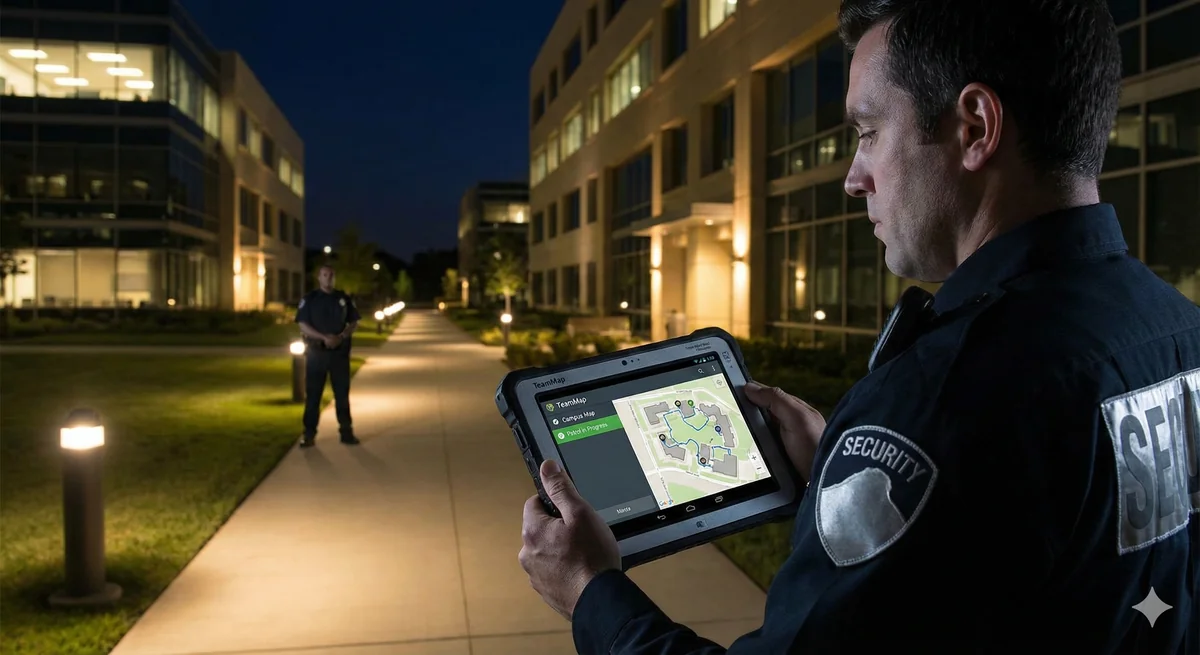
Applying for a Florida security guard license means filing with the Department of Agriculture and Consumer Services, not a police agency. FDACS runs the whole private security industry under Chapter 493, Florida Statutes, and its Division of Licensing takes the application.
File a Class D to work unarmed, and file it online, in person or by mail. Add a Class G to carry: $150 in statute. Add a Class B to run the agency, with a $300,000 liability certificate on file first. Individuals renew every two years, agencies every three, and a Class G requalifies every year inside that.
Every requirement below is cited to the statute or to an FDACS page. Anything FDACS does not publish in a form we could read is flagged rather than filled in. Check the current version at FDACS Private Security Licenses before you act on it.
Which Florida license do you actually need?
Start here, because people apply for the wrong one and lose the fee. FDACS lists the classes it issues.
| Class | Who needs it |
|---|---|
| D | Any individual performing the services of a security officer |
| G | Statewide firearm license. Only Class D, M or MB licensees may bear a firearm. |
| B | The agency itself, if you engage in business as a private security agency |
| BB / AB | Branch offices of a Class B, or of a combined A and B holder |
| M / MB | The manager of the agency |
| DS / DI | The school that trains Class D applicants, and the instructor who teaches them |
| K | The firearms instructor who teaches and requalifies Class G holders |
Most people reading this need one or two rows: D to work, D plus G to work armed, D plus B plus M to run a company. This post is the application walkthrough.
What do you need in hand before you apply for a Class D?
FDACS publishes the eligibility bar for the Class D security officer license, and it is short.
The training is not optional and it comes first, not after you start working. Under section 493.6303, a Class D applicant submits proof of a minimum 40 hours at a school or training facility licensed by the department. It may be delivered in person or by live online instruction, with the instructor verifying who you are and that you finished.
There are carve-outs. FDACS lists exceptions for current law enforcement officers, certain criminal justice certifications, qualifying military training and licensed instructors. If any of those describes you, check before you pay for a course you do not need.
FDACS does not publish the hour-by-hour subject breakdown of the 40-hour curriculum on the page above. The department sets it by rule and the licensed school builds the course to it. If you have seen a specific split quoted, get it from your Class DS school in writing rather than from a blog, including this one.
How do you file it?
FDACS takes a Class D application three ways: online through the state system, in person by appointment at a regional office, or by mail to the Division of Licensing in Tallahassee. Online is the one to use unless you need a document looked at.
Before you file, check the eligibility screen in section 493.6106. The drug and DUI provisions are narrower than most summaries suggest and both are rebuttable, but the rehabilitation documentation has to be in the application rather than sent after a denial. The full disqualifier list is in the Class D and Class G requirements.
How do you add the Class G to carry on duty?
Class G is the statewide firearm license. It sits on top of a Class D and it is the only route to carrying a firearm while working security in Florida.
Section 493.6105(5) sets the training precisely:
Class G training, per statute
- 28 hours of range and classroom training
- Delivered by in-person instruction or live online instruction through a secure website
- At least 8 of those hours must be in-person range training covering safe handling and storage
- No more than 20 hours may be conducted in an online classroom
The fee is one of the few Florida publishes directly in statute: section 493.6107 sets the Class G license fee at $150. Other class fees are set by FDACS and are nonrefundable, so confirm the current amount on the FDACS page for your class before you send anything.
What does it take to license the company, not just the officer?
A Class B agency license is separate from every individual credential your officers hold. The financial gate is the one that stops most new operators.
Under section 493.6110, a Class B license cannot be issued until the applicant files a certification of insurance evidencing commercial general liability coverage of at least $300,000 combined single limit for death, bodily injury, property damage and personal injury. That is the statutory floor. Real contracts routinely demand more, which is a separate conversation covered in general liability insurance for security companies.
The agency also needs a licensed manager, a Class M or MB. Section 493.6107 sets the Class M manager fee for a Class AB agency at $75, and the Class K firearms instructor license at $100. If you are working out the whole picture rather than just the Florida filing, starting a guard company covers the business side and running an armed operation covers what changes once Class G officers are on your roster.
How long does a Florida license last?
Two different clocks, and mixing them up is how a company ends up with a lapsed agency license.
- Individual licenses renew biennially, every two years, under section 493.6113.
- Class A, Class B, Class AB, Class K, Class R and branch agency licenses renew every three years.
- A Class G holder must show, for each year of the license period, at least 4 hours of firearms requalification training taught by a Class K licensee, and must requalify for each type and caliber of firearm carried on duty.
That last line is the operational trap. It is annual while the license itself is biennial, it is per weapon type, and it is the officer's problem until it becomes yours on the day a client audits your file. Tracking certifications before they expire is the cheapest fix there is.
How does an employer verify a license is real?
Look it up. The Division of Licensing runs a public licensee search where you can check an individual by name or license number, filtered by county, across every class the department issues.
Do it at hire and do it again at renewal season. A photocopy in a personnel file proves what was true the day it was made. This belongs in the standard sequence in hiring security guards, alongside the background check and the I-9.
Key Takeaways
- File with FDACS under Chapter 493, online, in person by appointment, or by mail to Tallahassee.
- Class D: 18 years old, work authorization, 40 hours at an FDACS-licensed school, fingerprints and photo.
- Class G is the statewide firearm license, $150 in statute. Class M is $75, Class K is $100.
- A Class B agency needs a $300,000 combined single-limit general liability certificate on file before it will issue.
- Individuals renew every two years, agencies every three. Class G requalifies 4 hours a year per type and caliber.
Continue Reading

How to apply for a California guard card, step by step
The order to do it in: Power to Arrest course, Live Scan prints, the BreEZe filing, then the training that runs on the clock once you are registered.
Florida guard license requirements: Class D and Class G
What Chapter 493 requires for a Class D and a Class G: the 40 and 28 training hours, the disqualifiers, and the annual firearms requalification.
Video analytics for security monitoring teams
Video analytics turn cameras into sensors: what detection, recognition and behavior tools can really do, why false alarms kill deployments, and the privacy law.