New York guard license: registration and training
What a New York guard license takes: 8 hours pre-assignment, 16 on the job, 8 in-service a year, the armed track, and what the employer has to file.


A New York security guard license is not one credential from one agency. Registration comes from the Department of State, training from a school approved by Criminal Justice Services, and an armed guard's pistol permit from the county. They do not wait for each other.
Registration runs two years. It takes 8 hours of pre-assignment training before you apply, 16 hours on the job within 90 days of being hired, and 8 hours of in-service every calendar year. Armed work adds a 47-hour course you cannot enroll in without a county pistol permit in hand. No employer sponsorship required.
Do you need an employer to get registered?
No. This is the thing people most often get wrong about New York.
The registration belongs to you, not to a company. The Department of State's security guard FAQ puts it plainly: "If security guard is applying independently, the Notice of Employment section need not be completed." Take the 8-hour pre-assignment course, file the Employee Statement and Security Guard Application with your certificate attached, get fingerprinted, wait.
The employer's part happens separately and later. They check you against the state registry before your first shift and file a status notification when you start.
Eligibility is short. The Department of State lists 18 or older, a current New York driver's license or non-driver ID, electronic fingerprinting, and no conviction for a serious criminal offense. The money: $36 to the Department of State with the application, $102.50 to IDEMIA for the fingerprints, $25 at renewal.
What training does New York require, and when?
Three courses in your first year, on three different clocks. Every hour of it has to be taken at a school approved by the Division of Criminal Justice Services.
| Course | Hours | When it is due |
|---|---|---|
| Pre-assignment | 8 | Before you apply. The certificate goes in with the application. |
| On-the-job (OJT) | 16 | Within 90 days of employment as a security guard. |
| Annual in-service | 8 | Each calendar year you hold a registration. |
| Firearms, armed only | 47 | Before the armed registration application. A valid pistol permit and an existing guard registration are required to enroll. |
| Annual firearms, armed only | 8 | Each calendar year, on top of the in-service hours. |
Hours and deadlines from the Department of State's security guard training requirements.
The 90-day clock is the one that bites employers. It runs from employment, not from the start of a particular assignment, and a guard who has not finished the 16 hours by day 90 comes off the schedule.
That arrives as a staffing emergency, not a paperwork one. It is Friday afternoon and Monday's overnight post has nobody eligible standing behind it.
Watching a hire date roll toward a deadline is the same job as tracking any expiring certification. It fails the same way, in a spreadsheet nobody opened.
In-service is counted per calendar year, not per registration. Since a registration runs two years, two 8-hour in-service courses have to land inside it before you can renew. Armed guards need two of those plus two annual firearms courses.
What does it take to work armed in New York?
The order matters more than the hour count. You need a valid New York State pistol permit and an existing guard registration before you can enroll in the 47-hour firearms course. Guards book the class first all the time and lose the seat.
The permit is a county process, handled by the licensing officer where you live, and it is slow. Penal Law § 400.00(4-b) says the licensing officer "shall act upon any application for a license pursuant to this section within six months of the date of presentment," which tells you the outer edge of the window rather than the typical wait.
The same section requires a concealed-carry applicant to complete a minimum of 16 hours of in-person live curriculum plus 2 hours of live-fire range training, and to score at least 80 percent on a written test. All of that sits ahead of the 47 hours you will do afterward for the armed registration.
Then the annual obligation doubles. Eight hours of in-service and eight hours of firearms training, every calendar year, for as long as you carry.
Start the county pistol permit before anything else. It gates enrollment in the firearms course, the statutory window for a decision is six months, and none of that window is under your control or your employer's. A company standing up an armed division should plan hiring around permit timelines, not around training calendars.
How long does the registration last?
Two years. General Business Law § 89-m says registration cards "shall expire two years from the date of issuance or last renewal as the case may be." A renewal notice is mailed 90 days ahead of the expiration date, and the renewal has to be in before that date or the guard cannot work.
Carry the card on duty and produce it when a state inspector or a police officer asks. It shows the registration number and the expiration date, which is the whole point of it.
What does the employer have to do?
More than most new owners expect. The Department of State's employer checklist sets out the obligations that come with hiring a guard in New York.
- Hold the business license. A Watch, Guard or Patrol agency license requires a principal aged 25 or older, a pass on the WGP examination, two years of qualifying experience, fingerprints, a $10,000 surety bond and liability insurance. Standing up the company is a separate project from registering the guards.
- Carry the right coverage. Minimum $100,000 per occurrence and $300,000 aggregate, and the policy has to cover false arrest, false imprisonment, malicious prosecution, libel, slander and violation of the right to privacy. Those are not automatic on an off-the-shelf policy, so read the form before you bind it.
- Check the registry before the first shift. The DOS Online Security Guard Registry returns a registration status and a transaction number. Print the summary and file it; that print-out is your proof of due diligence under 19 NYCRR § 174.6. The registry is only open 6:00 AM to 7:30 PM, Monday through Friday, which is worth knowing before you promise a Saturday start to somebody you just hired.
- File the status notification within 15 calendar days. Employment, retirement, resignation and termination each trigger one.
- Issue a company ID card. Laminated, 2 inches tall by 3¼ inches wide, carrying the business name and address from the license, the word "Employee", the guard's full name and title, the date of hire, and a 1½-inch photograph in the upper left corner.
Record retention is where the trade folklore runs backwards. New York does not want you sitting on guard files for years.
GBL § 89-g requires the registration application, the proof of due diligence, the photograph and the training records for the duration of employment plus one year after retirement, resignation or termination, "after which year the security guard company shall cause all such records and documents to be destroyed."
Holding those four documents indefinitely is not extra diligence. The statute says the opposite.
Key Takeaways
- You can register on your own. No employer sponsorship is required to apply.
- 8 hours pre-assignment before you apply, 16 hours OJT within 90 days of hire, 8 hours in-service every calendar year.
- The pistol permit is a prerequisite for the 47-hour firearms course, and the licensing officer has six months to decide.
- Registration cards expire two years from issue or last renewal.
- Employers check the state registry before the first shift and file status notifications within 15 calendar days.
Continue Reading

Verifying a Texas guard license as an employer
Check every officer against the free TOPS search rather than the card, track the two renewal clocks separately, and report status changes to DPS on time.
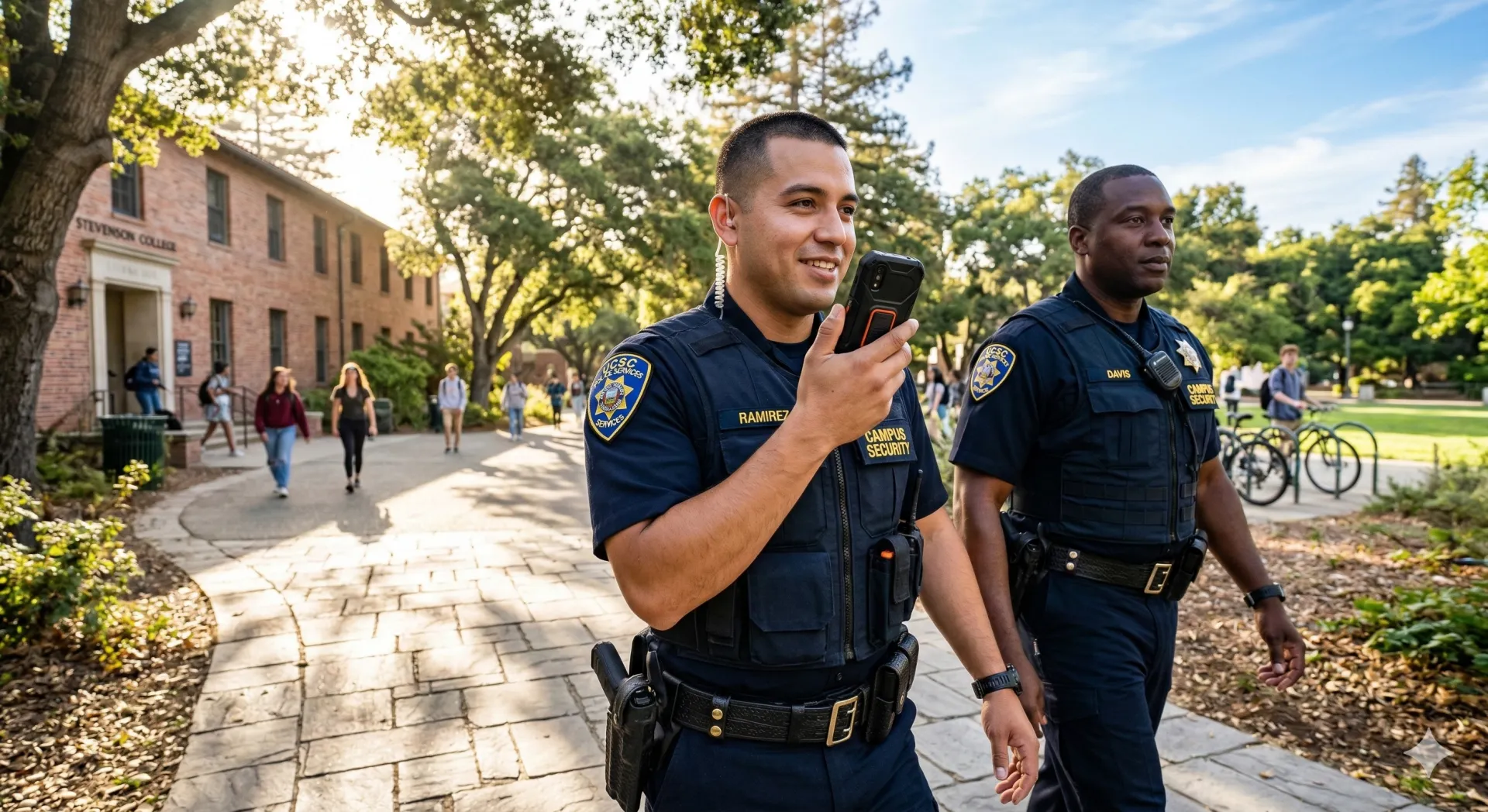
Florida guard license requirements: Class D and Class G
What Chapter 493 requires for a Class D and a Class G: the 40 and 28 training hours, the disqualifiers, and the annual firearms requalification.
California guard card requirements and training hours
Who needs a California guard card, the 8 and 32 training hours BSIS sets, the 8 hours a year after that, and the separate firearm and baton permits.