Warehouse security and cargo theft prevention
Warehouse security that holds: gate control, dock verification, seal numbers, fair exit inspections, and camera retention that outlasts your detection lag.

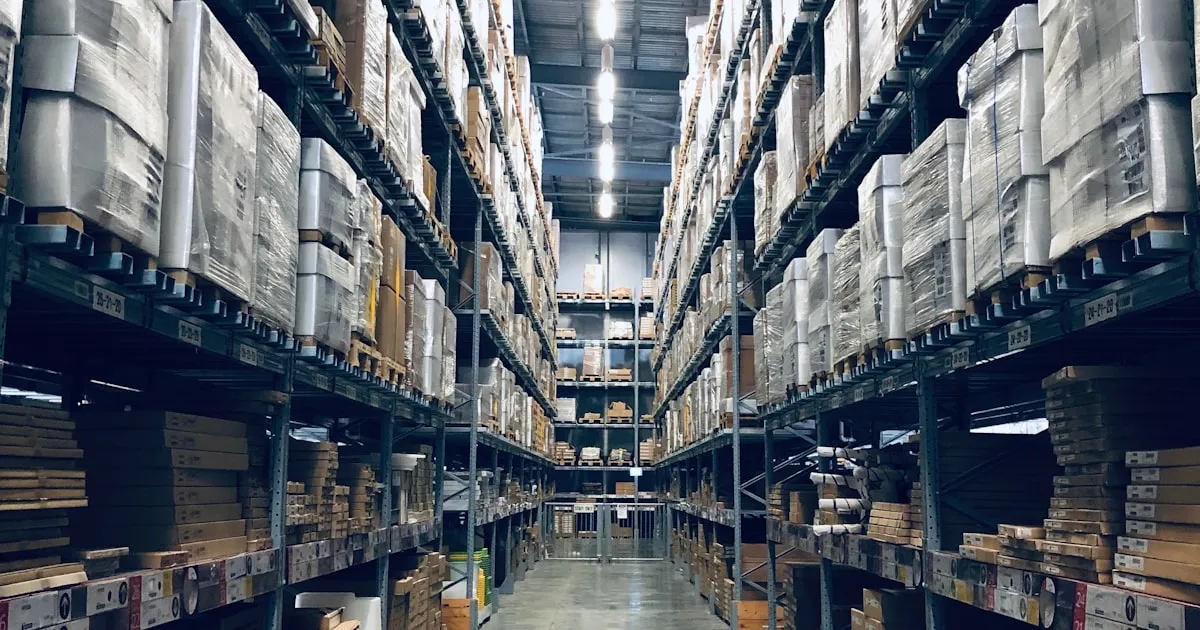
A distribution center is built to move goods out fast, and every choice that makes it efficient also makes it easy to steal from. Warehouse security is the work of putting verification back into a process engineered to skip it.
Warehouse security comes down to four things: control who gets through the gate, verify every load at the dock against its paperwork, build employee accountability that does not depend on catching someone in the act, and keep camera coverage on the points where goods change hands. Count your own shrink before you decide whether the fence or the dock is your real problem.
Who is actually taking product?
Two very different problems wear the same word. Treating them as one is how operators end up with a great fence and a hemorrhaging dock.
The external side is organized and patient. It looks like this:
- Cargo theft crews who know the shipment schedule before the truck does, usually because someone told them.
- Trailer theft, because hooking up a loaded trailer in a yard is quieter than cutting into a building.
- Fraudulent pickup, where a driver arrives with clean-looking paperwork, a plausible carrier name, and no legitimate claim to the load.
- Off-hours burglary, aimed at the window when the building is dark and staffing is thin.
The internal side is slower and much harder to see. Small items into pockets. A count that is short by two cases every Thursday. A shipping document adjusted so the discrepancy lands on the carrier. An employee who never touches the product but tells someone outside which trailer holds the electronics.
Which one costs you more? Nobody can answer that for your building, and any national figure you find was probably produced by a company selling a solution to it. Organized theft is loud and infrequent; internal loss is quiet and constant, so it survives longer before anyone investigates. Pull your own cycle-count variance for the last four quarters and see where it points.
CISA's Insider Threat Mitigation Guide is the free framework for building the program side of that, and it is written for organizations of any size.
What does layered access control look like?
The perimeter
Fencing exists to force every arrival through a point you are watching. That is its whole job. A gate with a guard on it beats an unattended card reader, because a person can tell the difference between a driver who is early and a driver who is lying.
Log every vehicle in and out. Time, plate, trailer number, carrier, who they said they were seeing. That log is worthless until the week you need it, and then it is the only thing you have.
The building
Fewer doors, more attention on each one. Badge access gives you the record of who entered which area and when. Visitor sign-in and escort rules keep non-employees from wandering; if you do not have a written procedure for that, the visitor management SOP template gives you a starting draft. Separating office access from warehouse access removes a whole category of people who have no reason to be near inventory.
Why the dock is where the losses happen
Everything else is preamble. The dock is the one place where goods legitimately leave the building, which makes it the only place a thief has to beat.
Docks are also where people get hurt, and your officer is often the only person standing there with nothing to unload. OSHA's warehousing hazards and solutions page covers what to look for. The powered industrial truck standard at 29 CFR 1910.178 requires the employer to ensure every forklift operator has completed training and evaluation before they drive.
A guard who reports an unchocked trailer or an untrained operator is doing security work, not stepping outside the post.
How do you hold employees accountable fairly?
Before they start
Background checks, employment verification, and reference calls to the previous employer. Employment verification catches the fabricated year that a criminal history check never will.
While they work
- A clear-bag policy, or no personal bags on the floor at all.
- Random exit inspections, announced as a policy and applied without exception. Random works because it is unpredictable, not because it is frequent.
- Lockers that the company can open, so personal storage is not a black box inside a secured building.
- Tighter monitoring on the aisles holding the expensive SKUs.
Controls that work even when nobody is watching
Separation of duties means no one person owns a unit of product from receiving through shipping. Two-person rules on high-value picks turn theft into conspiracy, which is a much higher bar. Cycle counts catch drift early. An anonymous tip line gives the person who saw something a way to say it without becoming a target.
What gets verified at each stage?
| Stage | What the officer or lead confirms | What it prevents |
|---|---|---|
| Receiving | Count against the bill of lading, inspect for damage and tampering, log discrepancies the same shift | Transit loss being discovered weeks later and blamed on the warehouse |
| Storage | Cage the high-value SKUs, restrict aisle access by role, cycle count on a schedule | Slow internal shrink accumulating below the audit threshold |
| Shipping | Load verified against paperwork, seal applied and recorded, driver ID checked, departure logged | Fraudulent pickup and short-loading |
Where do cameras actually earn their keep?
Coverage follows custody. Point cameras at the places where goods change hands or change status: dock doors, the receiving lanes, the high-value cage, the exits, the yard.
Two things decide whether that footage is worth anything.
Retention has to outlast your detection lag. Most internal schemes surface at a quarterly count rather than in the moment, so a 14-day window on a monthly counting cycle buys you a camera that can never answer the question you will ask it.
Image quality is the other one. It has to be good enough to identify a person and an action, not merely prove that motion occurred at 3:14am. Analytics can narrow the review, and video analytics for security covers what those tools do and do not catch.
What does a warehouse guard actually do?
Gate. Check IDs. Verify truck documentation against the appointment. Log the vehicle. Refuse entry when the story does not hold, and escalate the exception to a manager instead of improvising a decision at the window. The judgment call is the job; the logging is the proof.
Patrol. Interior and exterior rounds on an unpredictable pattern, checking doors that should be secured and finding the ones that are propped. Unverified rounds leave the client with your word and nothing else. Where you place the checkpoints matters more than how many you have, and NFC scans put a tag on the dock door itself so the scan cannot happen from the break room.
Exits. Random package and bag inspection, authorization checked for anything an employee is carrying out, and every inspection documented whether or not it found anything. The documentation is what demonstrates the policy was applied evenly, which is the part that matters if it is ever challenged.
What to do the moment theft is discovered
- Secure the area. Stop the removal, and stop anyone from tidying it.
- Notify management immediately, before you start forming a theory.
- Preserve evidence, including the camera footage, before the retention window rolls over it.
- Document what you observed, with times, names, and trailer or plate numbers. Facts only.
- Support the law enforcement investigation within company policy and the employee's rights.
Suspicion is different from discovery. Observe, write it down, tell a supervisor, and do not confront unless your post orders authorize it. Descriptions, plates, times. A report written the same shift is worth ten reconstructed on Monday, which is the argument for filing incident reports from the phone in the officer's hand rather than a form on the supervisor's desk.
Key Takeaways
- Organized theft is loud and rare; internal loss is quiet and constant. Your count variance says which you have.
- The dock is the only place goods legitimately leave, so it is the only place a thief has to beat.
- Seal numbers, trailer numbers, and driver ID checks are the three records that survive contact with an investigation.
- Camera retention has to outlast your detection lag, or the footage expires before you know to look.
- Document every exit inspection, including the ones that found nothing. That record is what proves the policy was applied evenly.
Continue Reading

Retail loss prevention strategies that work
What the NRF shrink numbers actually say, and the floor layout, exception reporting, officer training and outside partnerships that answer retail theft.
Security escalation matrix template: who to call
A security escalation matrix template with four severity levels, notification times, named backups and call sequences for medical, fire and active threat.
Site security assessment checklist: 101 points
A 101-point site security assessment checklist covering perimeter, access control, cameras, fire safety and operations, plus how to rank what you find.