Body cameras for security guards: policy first
Body cameras for security guards: what to test before you buy, what the policy must say, how consent law changes by state, and where footage lives.


A guard removes a trespasser from a lobby. Two days later the complaint says he shoved her. Without footage it is his word against hers, and the client will back the safer choice. That is the real argument for body cameras.
Cameras give you a record when an interaction is disputed. They also give you a storage bill, a consent problem that changes at the state line, and a policy you have to write before the first unit ships. Decide who records, what is kept, and who may watch.
What do body cameras change on a post?
The guard gets a defense. An allegation that would otherwise be unresolvable becomes a two-minute review. If the guard is assaulted, the assault is documented for both the prosecution and the workers' compensation claim. Real footage also makes better training material than any scenario you can stage.
The company gets evidence instead of testimony. Liability claims resolve on what the recording shows. Performance conversations move from "the client says you were rude" to a specific ninety seconds you can both watch. That is a fairer conversation.
The client gets a record of activity at their site and something to hand their own insurer.
Cameras also change guard behavior, and that cuts both ways. Some of what you will see on review is your own post orders being ignored. Plan for that before you turn them on.
Which camera features actually matter?
The cheapest camera is expensive the first time it dies at hour six of an eight-hour shift.
What to test in a trial, not read on a spec sheet
- Pre-event buffer. The camera holds a rolling loop and saves the seconds before the guard hit record. Without it the footage starts after the shove. Buffer length is configurable on most models, so confirm the actual window on the unit you are buying.
- Battery life against your longest shift, with margin for an incident that runs past end of tour. Test it at full brightness with the screen on, not in the box.
- Low-light performance. Security work happens in parking structures and loading docks. This is the spec most often oversold.
- Enough resolution to identify a face and a plate. You are not making a film. You are answering "was that him".
- Storage that covers a whole shift without a mid-shift card swap.
- Durability, because the camera gets dropped, rained on, and sat on in a patrol vehicle.
Mounting decides what the camera sees. The BJA toolkit notes cameras are typically worn on the uniform, optionally on the shoulder lapel, sunglasses or hat, and that uniform variation across seasons is part of the decision. A chest mount is stable and captures what is in front of the guard. A head mount follows their gaze, which is useful and also reads as more confrontational to the person being recorded.
Then there is how footage leaves the camera. BJA describes the two normal routes: upload through a docking station to local storage, or to a web-based digital media platform where the evidence is encrypted and managed, with some models able to upload from the field. Docking is cheaper and depends on the guard actually docking. Cloud costs more every month and removes that dependency.
Budget the whole kit, not the camera. Spare batteries, mounts, a dock per site and the storage subscription add up faster than the hardware does, which is true of most of the equipment a guard carries.
What has to be in the policy?
Cameras without a written policy create liability rather than reducing it. The BJA toolkit frames the policy around six areas: video capture, viewing, use, release, storage, and audits and controls. Work through them in that order.
Start with capture, because that is the part guards need to recite from memory. Name the situations where recording is mandatory: any interaction with the public, any incident response, any confrontation. Name the exceptions with equal precision: restrooms, changing areas, break periods, private conversations with a supervisor. A guard who has to guess will guess wrong under stress.
Then the prohibitions, short enough to remember and severe enough to mean it:
- No personal use of a company camera, ever
- No sharing footage outside the approved request process, and never on social media
- No deleting, editing or copying footage outside the retention process
That last one is the serious one. Destroying or altering footage is evidence spoliation, and it stays spoliation when it happens through routine deletion after you had notice of a claim. Your legal hold process needs to exist before the first subpoena, not after.
Where does the law change on you?
Recording law is state law, and video and audio are treated differently. Get your policy reviewed by counsel in every state you operate in before deployment, not after the first complaint.
The BJA toolkit sets out the split plainly. In one-party consent states it is lawful to record when one person consents, which the guard does by policy. In two-party consent states it is not lawful unless both parties consent. That single distinction can make the same camera legal in one contract and a problem in the next.
Notification is a separate question from consent. BJA cites the Police Executive Research Forum recommendation that officers inform people they are being recorded unless doing so would be unsafe, impractical or impossible, and is explicit that informing is not the same as needing consent. Telling people de-escalates more often than it inflames.
Healthcare needs extra care: patients may be identifiable in the background of ordinary footage, so get the recording terms in writing from the client's privacy officer before a camera goes on site. Read that alongside how hospital security actually works. BJA also notes the recommendation to obtain consent before recording an interview with a victim, which applies to the person who was just robbed in your client's parking garage.
How much footage data will you store?
More than the pilot suggests. A camera recording a full shift produces gigabytes a day, and the bill scales with guards multiplied by retention.
The fix is classification. Split footage into evidentiary and non-evidentiary at upload, and let each class carry its own retention clock. Routine patrol footage can expire on a short schedule. Incident footage stays until the incident is closed, including any proceeding that follows. Anything under legal hold is preserved until counsel releases it. Write the periods and the deletion process into the policy; nobody should decide retention by hand.
Access control is the other half, and it is the one that gets audited:
Footage is also only one artifact of an incident. The written report still carries the narrative, the timeline and the names, and no clip replaces it. If your reports are still on paper, the camera rollout is the moment to fix that too. Incident reports without the paper and writing reports people actually read cover the other half of the record.
How should a body camera rollout go?
Train on the camera and the policy together. A guard who can operate the device but cannot say when recording is mandatory is not trained. Cover the local recording law, the upload and tagging routine, and the three failures they will actually hit: dead battery, failed dock, accidental activation.
Pilot on a couple of sites with willing guards and a cooperative client. You are looking for procedural gaps, not hardware faults. Expand once the procedure survives a real incident.
Handle the resistance honestly, because it is not irrational. Guards hear surveillance before they hear protection, and both readings are true. Say so. Then show the first case where footage cleared someone. Fold the same message into your training program so new hires arrive expecting it.
Client notification and signage come before deployment. Some sites will have their own rules, and some will say no.
Then keep checking: random footage review, activation compliance, charging and cleaning, and a periodic look at whether the policy you wrote is the policy being followed. A camera nobody turns on is worse than no camera, because you and your client both believe you have a record.
Key Takeaways
- The policy comes before the purchase order: capture, viewing, use, release, storage, audits.
- Consent law is state law. One-party and two-party states treat the same recording differently.
- Informing people they are recorded is separate from needing consent, and worth doing anyway.
- Classify footage as evidentiary or not at upload, and give each class its own retention clock.
- Log every access, and set up legal hold before the first subpoena.
Continue Reading
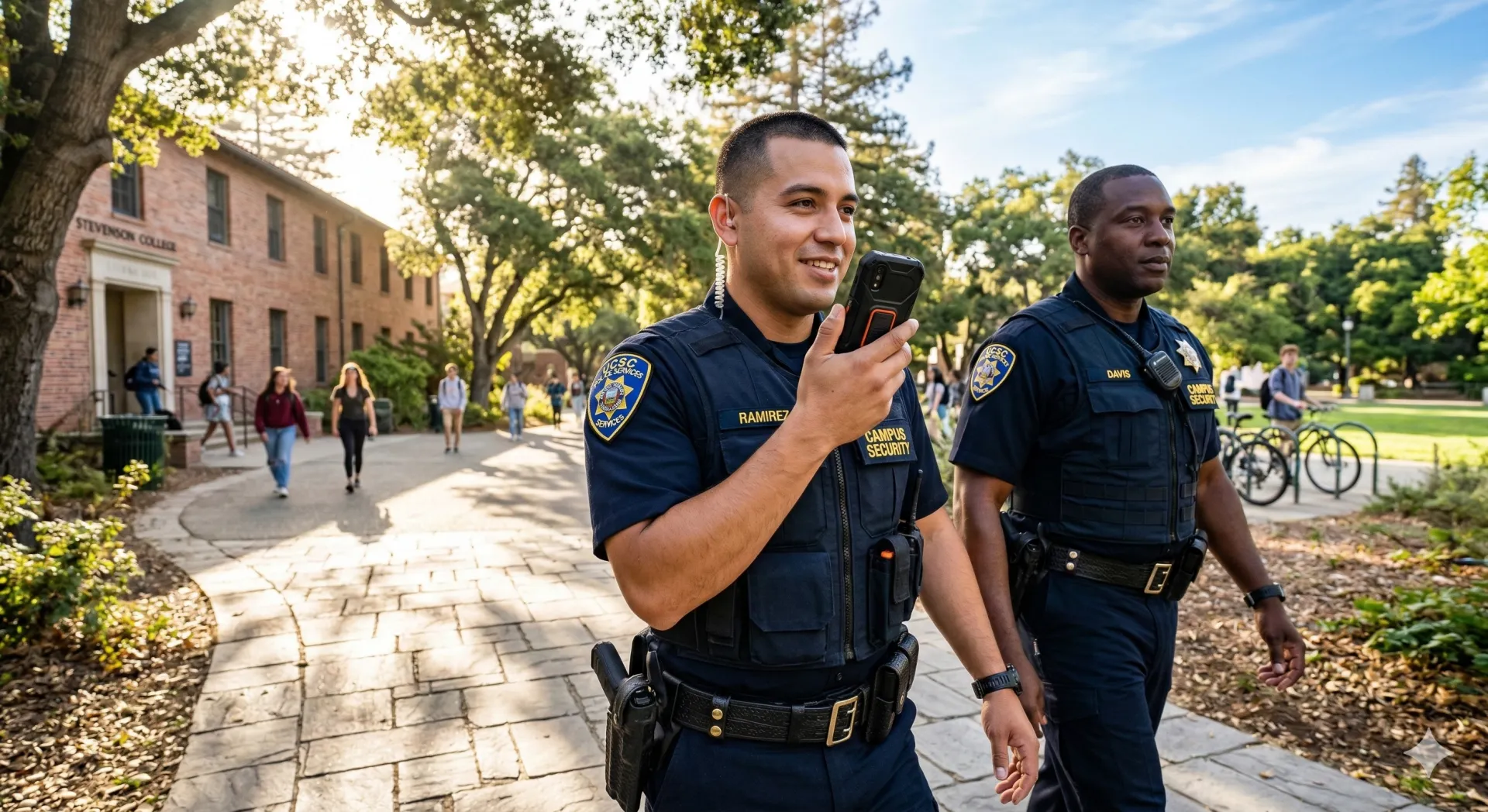
What autonomous security patrol robots do
Security patrol robots observe, record and alert but cannot intervene. What Knightscope and Boston Dynamics publish, realistic runtime, and where a robot fits.
Drones in security operations: rules and uses
Where a security drone beats a guard on foot, what FAA Part 107 requires of the pilot and aircraft, and the recording consent you need before the first flight.

Security operations trends for 2026: pay and data
Security operations trends for 2026: guard pay now matches warehouse work, clients buy reporting in the RFP, and paper is still the real technology gap.