Drones in security operations: rules and uses
Where a security drone beats a guard on foot, what FAA Part 107 requires of the pilot and aircraft, and the recording consent you need before the first flight.

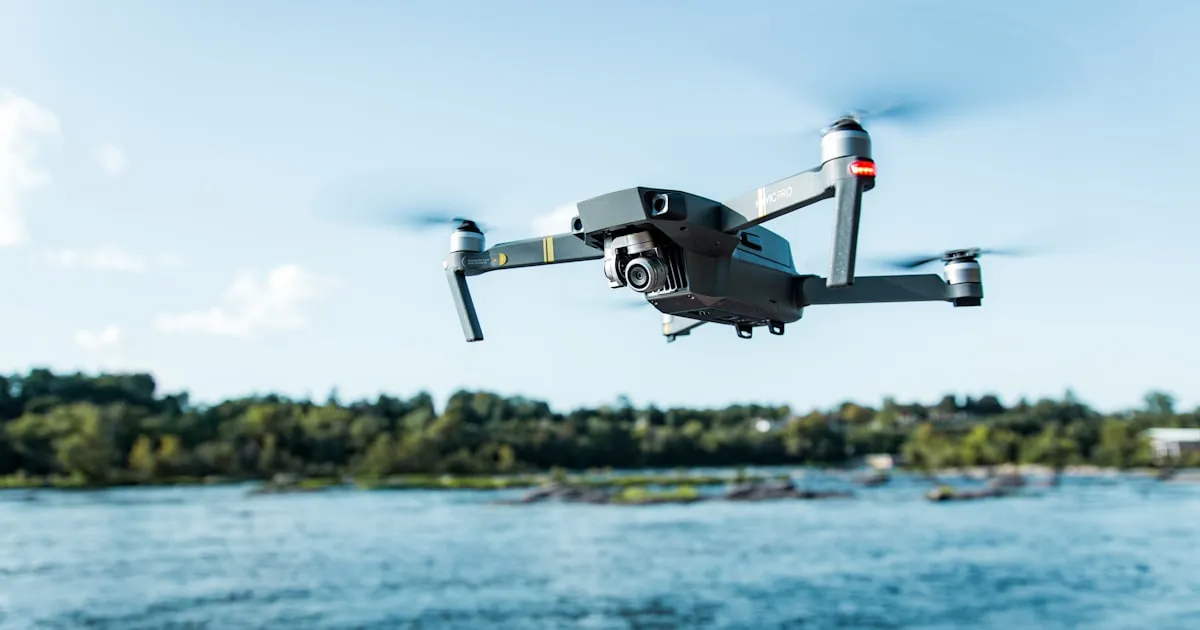
A drone covers a mile of fence line in the time a guard covers two hundred yards. What kills most security drone programs is not the flying. It is the certificate, the airspace check before every launch, and the neighbor asking what your camera saw.
A drone earns its keep on three jobs: fence lines too long to walk, alarm assessment before the guard arrives, and thermal detection after dark. Every commercial flight needs a Part 107 remote pilot, a registered aircraft with Remote ID, a check for controlled airspace, and 400 feet of ceiling. Night flying no longer needs a waiver. Flying beyond visual line of sight still does.
Where does a drone actually beat a guard on foot?
Three cases, and they are the ones worth building a program around.
Long perimeters. A solar farm, a lay-down yard, a rail siding. Ground patrol on those sites is mostly walking, and walking is the part the client is paying for without getting anything back. Thermal makes it work after dark, and rough terrain, ditches and water stop mattering.
Alarm assessment. The drone is overhead in under a minute and tells dispatch whether it is a raccoon on the fence or two people cutting through it. That is the difference between rolling a guard and standing him down, and it is where the hours pay for themselves.
Documentation. Storm damage, a post-incident scene, monthly construction progress. One flight produces a record nobody has to climb a ladder to get. On a construction contract that overlaps neatly with what a site theft-prevention program already documents.
Outside those three, a drone is a second job for a guard you already had. Crowd monitoring at large events is real but needs its own airspace planning, so read the event security planning guide before you promise a client aerial coverage of a stadium.
What does FAA Part 107 require?
Commercial flight in US airspace runs under 14 CFR Part 107. There is no hobbyist exception for a paid patrol.
The pilot and the aircraft
Someone on the crew holds a Remote Pilot Certificate, earned on an FAA knowledge test. It does not last forever: under 14 CFR 107.65 the pilot has to complete recurrent training within every 24 calendar months to keep flying.
The aircraft has to be registered, and since September 16, 2023 it also has to broadcast Remote ID under 14 CFR 89.105, either built in or through an attached broadcast module. An older airframe with no module is not legal to fly on a job.
The hard limits
- 400 feet above ground level. 14 CFR 107.51, with one exception: within a 400-foot radius of a structure you may go up to 400 feet above that structure's uppermost limit. Useful on high-rise roof work.
- 87 knots groundspeed, same section.
- Visual line of sight. The pilot or a visual observer keeps eyes on the aircraft.
- Manned aircraft always have right of way.
Night flying: no longer a waiver
This is the rule most operators still have wrong. Since April 6, 2021, Part 107 permits night operations without a waiver. 14 CFR 107.29 requires anti-collision lighting visible for at least 3 statute miles, and the remote pilot must have completed the updated knowledge test or training under 107.65 after that date. Given that most security work happens after dark, this changed the economics of the whole category.
Flying over people also has a path that is not a waiver. Subpart D sets four categories keyed to the aircraft's weight and injury potential, with labeling and declaration-of-compliance requirements attached to Categories 2 and 3. Check which category your airframe was certified into before you plan a flight over a parking lot at shift change.
What still needs relief
Beyond visual line of sight is the big one, and it is the capability autonomous patrol depends on. The FAA proposed a standing framework for it as Part 108 in the August 2025 proposed rule, and reopened the comment period in early 2026. No final rule has published, so beyond visual line of sight still runs on case-by-case Part 107 waivers. Plan on what is approved today.
Airspace, every single flight
Controlled airspace near an airport needs authorization, usually through LAANC in seconds from the app. Permanent restricted areas around federal facilities do not open at all. Temporary flight restrictions appear for stadium events, wildfires and VIP movements, which means the check happens before every launch and not once when you onboard the site. A blown TFR is a certificate action, not a warning.
Can you legally record from the air?
Flying legally and recording legally are two different questions with two different regulators, and the second one is mostly state law.
The line that gets crossed is the neighboring property. You can be in legal airspace and still have a camera pointed somewhere you have no authorization to look. Several states have drone-specific surveillance statutes on top of general privacy law. Audio is worse than video: recording a conversation can trigger a state wiretapping statute that carries criminal penalties video never would.
Five things to have in place before the first flight:
- Written authorization from the property owner that names aerial surveillance specifically. A standard guard services agreement does not cover it.
- Flight paths and camera angles planned to keep adjacent parcels out of frame.
- A retention and deletion policy for footage, with a stated period.
- Posted signage at entrances telling visitors aerial surveillance is in use.
- Access control on the footage itself, so the recording cannot walk out on a personal drive.
The client-communication half of this is the same work as any camera rollout. The approach in rolling out GPS without losing trust transfers directly: tell people what is being recorded, why, and for how long, before they find out on their own.
What should you actually buy?
Match the airframe to the job rather than to the spec sheet.
Thermal is the feature that decides whether a night program works, and it is the line item that moves the price most. Optical zoom decides whether you can read a plate from a legal altitude. Weather sealing decides whether the contract has a rain exclusion. Obstacle avoidance and return-to-home are what keep the airframe out of a transformer yard.
Advertised endurance in this class generally lands in the 20-40 minute range, but that number is measured in still air at moderate temperature. Fly the airframe you are considering on the actual site, in February, and plan the battery rotation off what you measured. Prices move too fast to publish a useful range here, so quote thermal and non-thermal configurations side by side and let the delta tell you what the night capability costs.
Then budget the parts nobody quotes: pre-flight checklists, battery cycle tracking and replacement, firmware and calibration, a spare airframe, and enough recurring stick time that your certificated pilot is not flying a live incident for the first time in six weeks. Those obligations belong on the same maintenance schedule as your patrol vehicle fleet.
Are autonomous docked drones ready?
The pitch is a drone that lives in a weatherproof box on the roof, launches on an alarm, flies a stored route and charges itself. The hardware exists.
The constraint is regulatory, not mechanical. A drone-in-a-box responding to an alarm on a large site is flying beyond visual line of sight, which today means a waiver. Add site infrastructure, power, network and a service contract and the total is a capital project rather than an equipment purchase. It is closer than it was, and it is still a pilot program rather than a line on a bid. The same caution applies to ground-based autonomous patrol robots.
Where does the flight fit in the operation?
The drone produces evidence. It does not produce a record on its own. A flight that spots a cut fence still needs a dispatch, an incident report with a timestamp and location, and a guard who confirms he cleared it. TeamMap has no drone integration, but it logs the incident with photo, GPS fix and time, and you send the dispatch from the map to whoever is closest. Both sit on one timeline you can show the client at the quarterly review.
Key Takeaways
- Three use cases carry a drone program: long perimeters, alarm assessment, documentation flights.
- Part 107 means a certificated pilot, a registered aircraft with Remote ID, and 400 feet AGL.
- Night flying needs no waiver. It needs anti-collision lighting visible for 3 statute miles.
- Beyond visual line of sight still needs a waiver, which keeps docked systems in pilot programs.
- Owner authorization naming aerial surveillance, a retention policy and signage go in first.
Continue Reading
What autonomous security patrol robots do
Security patrol robots observe, record and alert but cannot intervene. What Knightscope and Boston Dynamics publish, realistic runtime, and where a robot fits.

Security operations trends for 2026: pay and data
Security operations trends for 2026: guard pay now matches warehouse work, clients buy reporting in the RFP, and paper is still the real technology gap.

How to win security contracts with technology
Buyers want proof a patrol happened. Put GPS-verified routes and same-day reports in the bid, demo them live, and answer a cheaper offer with evidence.