Event security planning: staffing to egress
Risk assessment, a staffing number you can defend, screening throughput, crowd density and the exit plan, for concerts, festivals and corporate events.

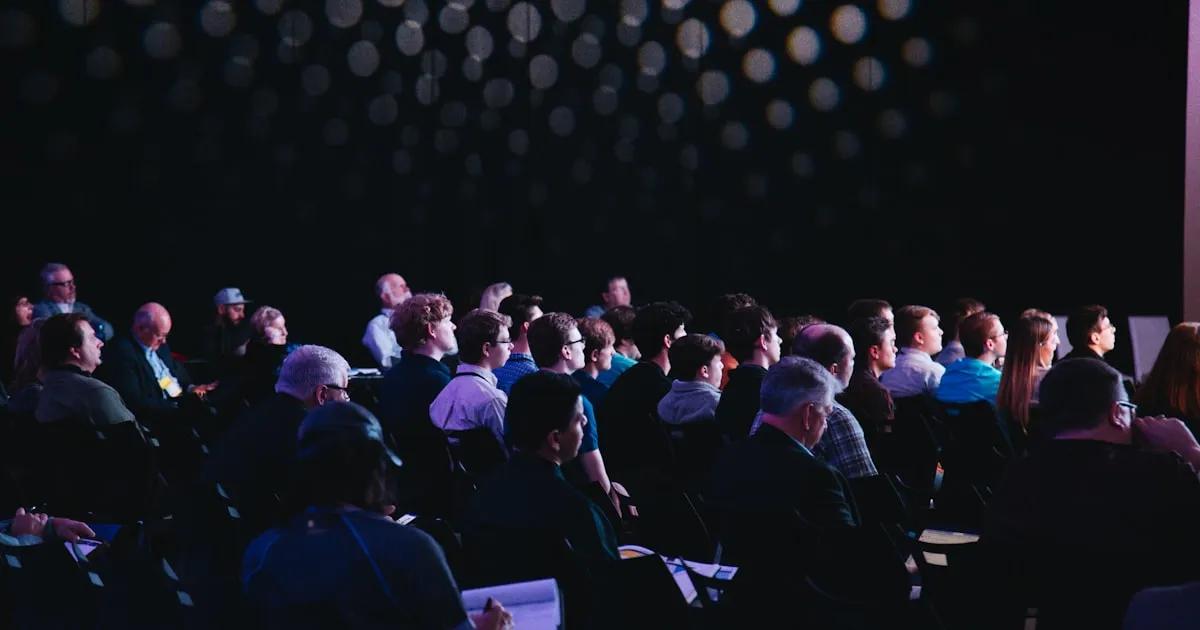
A venue that handles four hundred people on a Tuesday holds nine thousand on Saturday night. Same doors, same corridors, same two restrooms. Nothing about the building changed, and everything about the risk did. Event security planning starts there.
The work happens before doors: a written risk assessment for this venue, a staffing number you can defend, zoned credentials, screening that keeps the queue moving, and rally points somebody has walked. The ratios the trade quotes, roughly 1 per 100 seated and 1 per 50 standing, are rules of thumb rather than standards.
What goes into the pre-event risk assessment?
Three questions, answered in writing, before anyone is scheduled.
What kind of event is this, and what has gone wrong at ones like it?
A corporate awards dinner and a standing-room hardcore show are not the same job. Genre, ticket price, average age and whether alcohol is served all predict crowd behavior better than the venue's own history does. Look up what happened at the last three comparable events on this tour or in this series. That is intelligence, and it is free.
What does this specific building do to a crowd?
- Where does the floor plan pinch: stair heads, corridor junctions, the merch table
- Every access point, including the ones staff use and the ones nobody has opened in a year
- Emergency exits, which must stay usable for egress and closed to entry
- Sightlines, and which areas nobody can see from anywhere
- Weather exposure for outdoor sites, for the crowd and for your officers standing in it
Who is attending who changes the plan?
An executive, a performer with a following, an elected official, a controversial speaker. Any of these adds a protected route, a secure holding area, and a personal detail you now have to coordinate with rather than work around. Settle authority before the day. Two security teams discovering each other at a loading dock is a bad first meeting.
CISA's Securing Public Gatherings resources include a mass gathering planning tool built for exactly this stage, and the framing there is worth borrowing: public gatherings are open by design, so the plan has to protect people without turning the venue into something nobody wants to attend.
How many officers does the event need?
Nobody can hand you a real number, because the inputs are local. What the trade quotes to each other looks like this.
| Event type | Rule-of-thumb ratio | Why it moves |
|---|---|---|
| Seated corporate, no alcohol | 1 per 100 to 150 | Predictable crowd, fixed seats, low intervention rate |
| Seated with bar service | Tighter than the above | Alcohol raises intervention frequency more than headcount does |
| Standing concert or festival | 1 per 50 to 75 | Surge risk, free movement, harder to track anyone |
Treat those as a starting hypothesis, not a standard. There is no federal ratio, the number your jurisdiction or insurer requires may be higher, and a venue with one narrow egress needs more staff than the same headcount in an open field. Standing crowds are the real variable: they compress, and compression is what kills people at events.
Then there is the staffing you actually get on the night. Event work is where callouts hurt most, because there is no next shift to catch it. Reducing callouts is a scheduling problem you solve weeks earlier, and building the schedule so overtime does not eat the margin is the other half of it.
How should access control be set up?
The entry line is the first control and the first hazard
Screening that is too slow creates a dense, frustrated, unscreened crowd outside your perimeter. That crowd is now the risk. Throughput is a safety measure, not a convenience.
That last one is not optional. Under ADA Title III, where the main entrance cannot be made accessible an alternate accessible entrance may be used, and it must be open whenever other public entrances are. Do not solve it with a side door staffed by nobody.
Zones and credentials
Public, restricted, back of house, VIP. Different colors, different shapes, readable at arm's length in bad light by an officer who has been standing for six hours. Brief every officer on which credential opens which zone, and brief them on what a forged or upgraded one looks like, because at any event with real access value somebody will try.
The same discipline that runs a lobby applies here. A visitor management SOP is the version of this you already run on ordinary sites.
How do you manage a crowd before it becomes dangerous?
Density is the thing you are watching. Not behavior, not intoxication, density.
- Put officers where they can see across the crowd, not into the back of it. Elevated positions earn their cost.
- Know your pinch points in advance: entrances, restrooms, concessions, the gap between sections, the front-of-stage barrier.
- Report building density immediately, by location. "It is getting tight at the west stairs" is an actionable transmission.
- Manage the concession and restroom queues too. Frustration in a line becomes an incident in a crowd.
The end of the event gets less planning than the start and kills more people. Everybody leaves at once, into a street or a transit station that was not designed for it. Staggered release, marked exit routing, transport coordination, and staff who stay until the site is empty rather than clocking out at the last song.
What does the emergency plan need to cover?
Evacuation
- More than one route, because the primary will be the one that is blocked
- Rally points far enough out that emergency vehicles can still get in
- A way to account for staff, which is the only headcount you can actually complete
- A PA script written in advance, because nobody composes a calm announcement live
Ready.gov's guidance for a mass gathering incident is the baseline your staff briefing should match: get away, put a solid barrier between yourself and the threat if you cannot, fight only as a last resort, and when law enforcement arrives keep hands visible and follow their direction. Brief it in those words so your officers and your attendees have heard the same thing.
Medical
First aid stations sized and staffed for the injuries this event produces, not for a generic average. Large events get EMS staged on site with a kept-clear ambulance route. Agree the threshold for calling EMS versus handling it at the station before the night, or every scraped knee escalates and the one that matters waits.
Command
One command post, one person with overall situational awareness, and an authority structure that venue management and responding agencies both recognize. That is what the incident command system exists to give you, and it is worth adopting before the night you need to hand a scene to the fire department.
The rest of the scenarios, medical, fire, suspicious package, severe weather, are the same trees you use anywhere. Keep the emergency response quick reference at the command post and at each entrance.
Why do events need their own radio channels?
Because shared channels fail exactly when volume peaks. Security traffic ends up behind a conversation about a broken beer tap.
- Dedicated security channel, separate from venue operations
- Channel discipline briefed with the assignments, not assumed
- A stated escalation phrase that clears the channel instantly
- A backup that does not depend on the cell network
That last point catches people out. Ten thousand phones in one field saturate the local cell site, and the moment you most need to call someone is the moment the call does not connect. Plan on radios, landlines and runners, and test the radios in the building rather than in the parking lot.
What happens after the last attendee leaves?
- Controlled departure, worked as deliberately as entry
- Full venue sweep: restrooms, stairwells, back of house, under seating
- Documentation written the same night, while it is still accurate
- After-action review inside a week, with the officers who worked it
The after-action is where the money is. What did we staff wrong, which pinch point did we miss, which gate stalled and why, what did the client complain about. Write it down and the next event at that venue starts from a plan instead of a memory.
Incident reports written the same night are what make that review worth having.
Key Takeaways
- Assess this event at this venue in writing. Genre, alcohol and floor plan predict more than headcount.
- Ratios of 1:100 seated and 1:50 standing are rules of thumb. Your jurisdiction or insurer may set a higher floor.
- Screening throughput is a safety control. A slow line builds a compressed crowd outside your perimeter.
- Watch density, not behavior, and report it by location the moment it builds.
- Plan egress as hard as ingress, on a radio channel that survives ten thousand phones on one cell site.
Continue Reading
Retail loss prevention strategies that work
What the NRF shrink numbers actually say, and the floor layout, exception reporting, officer training and outside partnerships that answer retail theft.
Crisis management for security guard companies
Crisis management for a guard company: classification criteria, a notification chain that runs at 2am, one spokesperson, and the record you build during it.
Construction site security: threats and the plan
What gets stolen from a jobsite, how to assess the risk at each phase, and how to choose between patrol, remote monitoring and a standing guard.