Church security planning for volunteer teams
How to plan church security without a fortress feel: build a volunteer safety team, consolidate entry, and rehearse the emergency plan.


Church security planning starts from a hard fact: a church is designed to let strangers walk in. The job is not to lock the building down. It is to know who came through the door on a Sunday without anyone feeling watched.
Church security runs on four things: a trained volunteer safety team with assigned roles, entry consolidated through monitored doors, a written emergency plan that has actually been rehearsed, and a relationship with the local police department built before you need it. Start with the free CISA Houses of Worship Security Self-Assessment, then fix what it flags in order.
Why a church is not a retail store
A store can put a turnstile at the entrance and lose nothing. A church that does the same has changed what it is. The newcomer who was going to try one service now feels screened, and does not come back.
So the tension does not get solved. It gets managed. The target is security most of the congregation never notices: the greeter shaking hands is also watching the parking lot, and the usher walking someone to a seat is standing where he can move if something happens.
Money makes it harder. Most congregations cannot buy contract security for a Sunday, let alone a Wednesday night. That pushes almost everyone toward volunteers, which works when the team is organized and fails quietly when it is not.
How do you build a volunteer safety team?
The people are usually already in the pews. Retired officers, veterans, paramedics, ER nurses. They tend to say yes when asked directly, and they bring judgment you cannot train into someone in a weekend.
Willingness is not a team, though. Six well-meaning volunteers with no assigned roles will collide with each other during the one incident that matters. Write down who owns what before anything happens.
Then train against those roles. De-escalation first, because the overwhelming majority of what a church team handles is one upset or unwell person, not an armed attacker. CPR and AED certification next. Tabletop exercises after that, because a plan nobody has walked through is a document, not a capability. Building the curriculum is the same exercise as building a guard training program, only with volunteers and less time.
One rule outranks the rest. Safety team members are hosts first and responders second. A team that reads as security at the door deters some threats and also deters the visitor the church exists for.
How do you control access without barriers?
Badge readers and checkpoints are the wrong tool here. What works is soft access control, which channels and observes traffic instead of blocking it.
Staff the main doors with greeters. A greeter who engages someone in conversation gets a read on demeanor that no camera provides, and can pass a quiet word to the team without anyone else noticing.
Lock the side doors during service. Most incidents start at an unmonitored entrance. Consolidating entry puts your few observers where the traffic actually is. Set the standard in writing, the same way a visitor management SOP does for a commercial site.
Treat children's areas as the exception. Check-in that matches a child to an authorized adult, controlled classroom doors, a written pickup policy. This is the one place where visible security is not just tolerated but expected, and parents notice its absence faster than they notice anything else.
If you want a structured way to find the gaps rather than guessing at them, work through a site security assessment for the campus and a physical security audit for the building itself.
What does the emergency plan need to cover?
Nobody wants to sit in a room and plan for an attack on their own sanctuary. Do it anyway. The middle of the event is the worst possible time to have the conversation for the first time.
Medical emergencies are the most likely call by a wide margin. Congregations skew older, services run long, rooms get warm. Know where the AEDs are, know who on shift is CPR certified, and have a fixed 911 protocol including who unlocks the door for the ambulance.
Fire evacuation is harder than it looks. Several hundred people, a fair number with mobility limits, an unfamiliar layout, and children separated from parents in the nursery. That needs multiple routes, named assembly points, and an accountability system for the kids' wing that someone has actually timed.
Active threat is the decision nobody rehearses. Lock down or evacuate is situational and there is no clean answer, which is exactly why the team should argue about it in a quiet room on a Tuesday. Also settle the boring parts: how a decision reaches the platform mid-service, and how the team talks to each other while it happens.
CISA's Mitigating Attacks on Houses of Worship Security Guide is built on an analysis of ten years of targeted attacks on faith facilities, and it is free. Read it before you write your own plan. For the format of the plan itself, an incident response playbook and a one-page emergency response quick reference beat a binder nobody opens.
Larger campuses running multiple services and a parking team eventually need a command structure rather than a phone tree. That is what the Incident Command System gives you.
What technology is actually worth buying?
Technology supplements human vigilance. It does not replace it. Three things earn their cost.
Cameras let one person watch the lot, the entrances and the children's wing at once, and give you footage afterward for the police report and the insurance claim.
Communication. Two-way radios still work fine. A team chat app with voice notes runs on the phones team members already carry, costs less and skips the hardware, which matters when the security budget is whatever was left over. Whatever you pick, people have to be able to use it discreetly during a service.
A panic alert so the greeter at the far door can raise the whole team with one press instead of walking across the building to find someone.
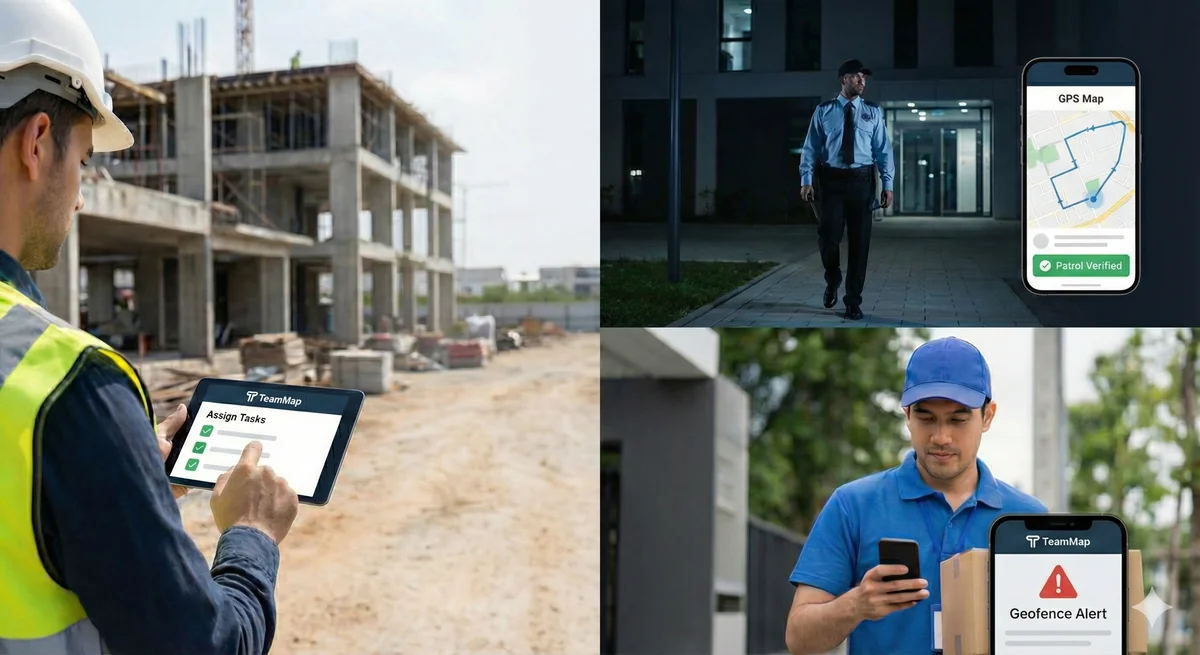
Software built for security teams handles the last two together. TeamMap has team channels with voice notes and an SOS button that puts the sender's location in front of everyone on the team, which is the same problem a church safety team has on a spread-out campus.
How do you work with the local police?
Most departments will help, but the relationship has to exist before the call. Invite officers for a walkthrough. They learn the layout they would otherwise be seeing for the first time under fire, they will point out things you stopped noticing years ago, and you get names and numbers.
Ask two specific questions while they are there. Will patrol swing through during service times? And do any officers work off-duty security you could hire for the Christmas Eve services or the community meal?
Can you get funding for this?
Possibly. FEMA runs the Nonprofit Security Grant Program, which funds target hardening and physical security improvements for nonprofits at high risk of attack, houses of worship very much included. Applications go through your state's homeland security office and the deadlines are real, so find the state contact early rather than in the week the notice drops.
Do the CISA self-assessment first, then apply. A grant application that names specific vulnerabilities from a structured assessment reads very differently from one that asks for cameras.
Key Takeaways
- Effective church security is invisible to worshippers and ready when it is not
- A volunteer safety team needs written roles, not just willing people
- Access control works through hospitality: greeters who observe while welcoming
- Children's areas are the one place obvious security is expected
- Medical calls, not attacks, are what your team will handle most
Continue Reading

Retail loss prevention strategies that work
What the NRF shrink numbers actually say, and the floor layout, exception reporting, officer training and outside partnerships that answer retail theft.
Security escalation matrix template: who to call
A security escalation matrix template with four severity levels, notification times, named backups and call sequences for medical, fire and active threat.
Site security assessment checklist: 101 points
A 101-point site security assessment checklist covering perimeter, access control, cameras, fire safety and operations, plus how to rank what you find.