Hybrid security: remote monitoring plus patrol
Live monitoring backed by a patrol officer who can be dispatched. Which clients it fits, where it fails, what to build, and four ways to price it.

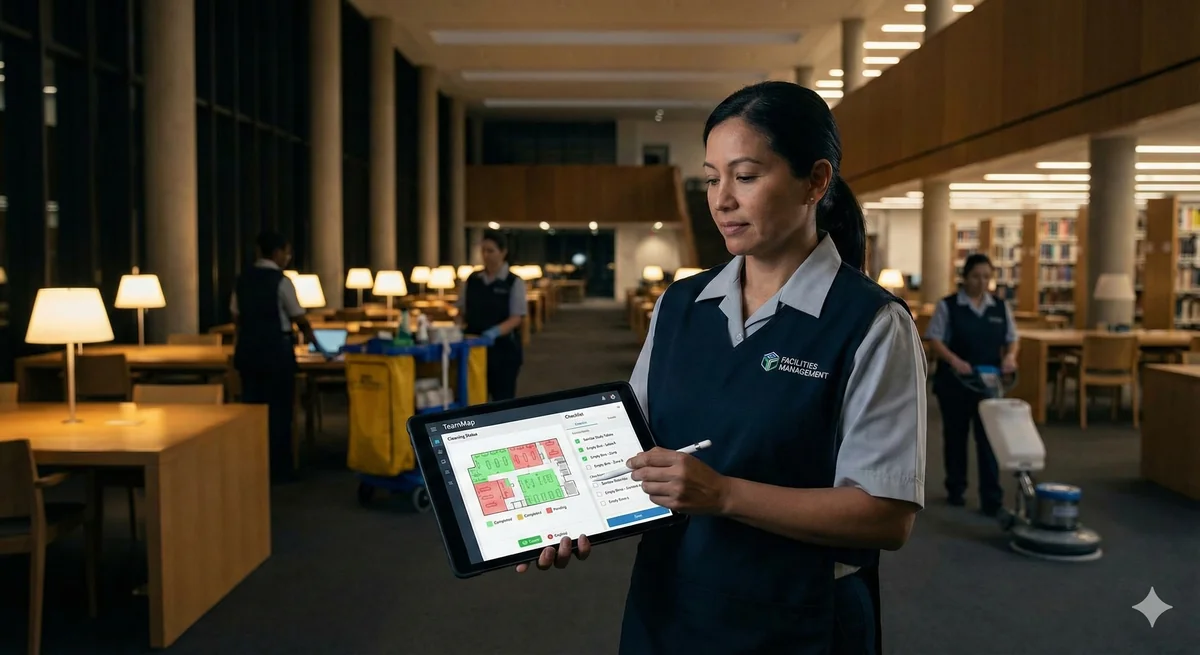
Hybrid security pairs remote monitoring with a mobile patrol officer who can be sent to the site. Most clients cannot fund a guard in an empty building at 3am, and most buildings do not need one. They need someone watching, and someone who can arrive.
Hybrid security means cameras watched by a live operator plus a patrol officer dispatched when something needs a person on the ground. It fits multi-site portfolios, after-hours coverage, and clients priced out of a 24/7 post. It does not fit high-traffic lobbies, access control, or anywhere a threat can do real damage inside your drive time.
What is hybrid security, exactly?
A traditional post puts a body on site continuously. That is 168 hours a week. At 40 hours a head, before holidays, sickness or training, you are staffing 4.2 people to hold one chair.
Price it from your own numbers. Take your bill rate, multiply by roughly 730 hours in an average month, and that is the client's invoice. With the Bureau of Labor Statistics median guard wage of $18.29 an hour as a floor and a normal multiplier on top, the monthly figure lands in five figures fast. That number is why the conversation happens at all. There is more on the multiplier math in setting your hourly bill rate.
Hybrid swaps continuous presence for continuous observation plus response on demand. One operator covers many sites at once. How many is a policy you set, not a property of the software, and it is the single decision that determines whether your monitoring is real or decorative.
The model works because most posts are mostly quiet. A closed distribution center can run weeks without an event worth writing up. You are paying a guard to be insurance against something rare. Hybrid keeps the watching and buys the response separately.
Which clients does hybrid actually fit?
Residential work has its own version of this trade-off, covered in remote monitoring for residential security.
Where does hybrid fall short?
Say this part out loud in the sales meeting. A mismatched client cancels in month four and tells everyone why.
Do not sell hybrid into these
- High-traffic sites. A camera watches a lobby. It cannot check a credential, answer a question, or point someone at the elevator.
- Active access control. Remote systems buzz doors and write logs. They do not inspect an ID, search a bag, or make a judgment call about the visitor with no appointment.
- Short tolerance for delay. Response is drive time plus dispatch time. If the harm lands inside that window, the client needs someone already there.
- Deterrence as the product. Some clients are buying a visible uniform. A camera on a pole does not do that job, and pretending otherwise loses the account.
There is a harder version of the delay problem, and it is worth knowing before you write a service level. In its guide to false burglar alarms, the ASU Center for Problem-Oriented Policing reports that between 94 and 98 percent of alarm calls are false, which is why a growing number of jurisdictions require verified response before police will roll.
Your operator is that verification. It is the thing you are actually selling, and it is why a lazy monitoring desk is worse than no monitoring at all.
What do you have to build to offer it?
The monitoring desk
The video management system has to present many sites at once without burying the one that matters. Motion and anomaly detection earn their keep here by pulling an operator's eyes to a frame instead of asking them to find it. More on that in video analytics for security.
Operators are the difference between monitoring and recording. They read a scene off partial information, decide between dispatch, client call and note-only, and talk to a patrol officer while it is still happening. It is skilled work. Staff it that way.
Written responses for each alert type
Motion inside a closed building. A figure at the fence line. A car in the lot at 2am. Each one needs a decision already made, in writing, before the night it happens. Improvised judgment at 3am is how a client finds out what you actually sold them. The structure is the same as any incident response playbook.
Two-way audio
Talk-down turns watching into intervention. Someone who hears their own description read back to them over a speaker usually leaves before the patrol car turns the corner. It is the cheapest response you own.
The patrol half
Response is a geography problem. Officers have to be positioned so that every monitored site sits inside the drive time you promised, which means zoning your coverage before you sign the contract, not after. Live GPS lets dispatch send the closest unit instead of the next name on the list. Sending a guard in three steps covers the dispatch side, and mobile patrol fleet management covers the vehicles.
How do you price it?
| Model | What it does well | What it does badly |
|---|---|---|
| Flat monthly monitoring fee | Predictable recurring revenue that covers operators and infrastructure whether or not anything happens | Carries no signal about workload, so a noisy site quietly eats the margin |
| Per-dispatch response fee | Cost tracks activity exactly | Teaches the client to hesitate before asking for the thing they hired you for |
| Included responses, then billed | No hesitation inside the allowance, protection above it | You have to guess the allowance right, and you will guess wrong on the first few sites |
| Per-camera | Scales with the operator attention a site genuinely consumes | Punishes the client for adding the camera that would have made the site easier to watch |
Most operators end up on a base fee plus a bounded number of included responses. Whichever you pick, re-price the noisy sites at renewal instead of absorbing them.
What do you tell the client up front?
Three things, in writing, before the first invoice.
- The real response range, not the good one. If the site runs 12 to 30 minutes depending on traffic and where the unit was, write 12 to 30. A promised 15 that misses is a renewal you already lost.
- What triggers a dispatch versus a phone call. Not every alert is worth a vehicle. Publish the escalation criteria so the client is not surprised by the alert that got a note instead of an officer.
- How long video is kept and how they get it. Insurers and lawyers ask for footage months later. Retention period, access route, what happens at expiry. Settle it on day one.
The same discipline pays off at the quarterly review, where the client sees what the fee bought. Client reports that win renewals covers what to put in front of them.
Key Takeaways
- A 24/7 post is 168 hours a week and 4.2 heads. That arithmetic is the entire reason hybrid sells.
- Hybrid fits multi-site, after-hours, and budget-limited clients. It does not fit lobbies, access control, or short tolerance for delay.
- The ASU problem-oriented policing guide puts false alarm rates at 94 to 98 percent, so operator verification is the product.
- Write the response protocol for each alert type before the night you need it.
- Quote the honest response range. The best-case number is the one that costs you the renewal.
Continue Reading
Remote monitoring for residential security clients
Remote monitoring for residential security: what it replaces, when it fails, how to price the response, and what to tell the board first.
Video analytics for security monitoring teams
Video analytics turn cameras into sensors: what detection, recognition and behavior tools can really do, why false alarms kill deployments, and the privacy law.
How to apply for a Florida security guard license
Which FDACS class to file, what goes in the Class D and Class G applications, the fees set in statute, and how the two-year and three-year renewals work.