School security officer guide for K-12 campuses
What a school security officer does on a K-12 campus: access control, drills, student relationships, and where private authority ends.

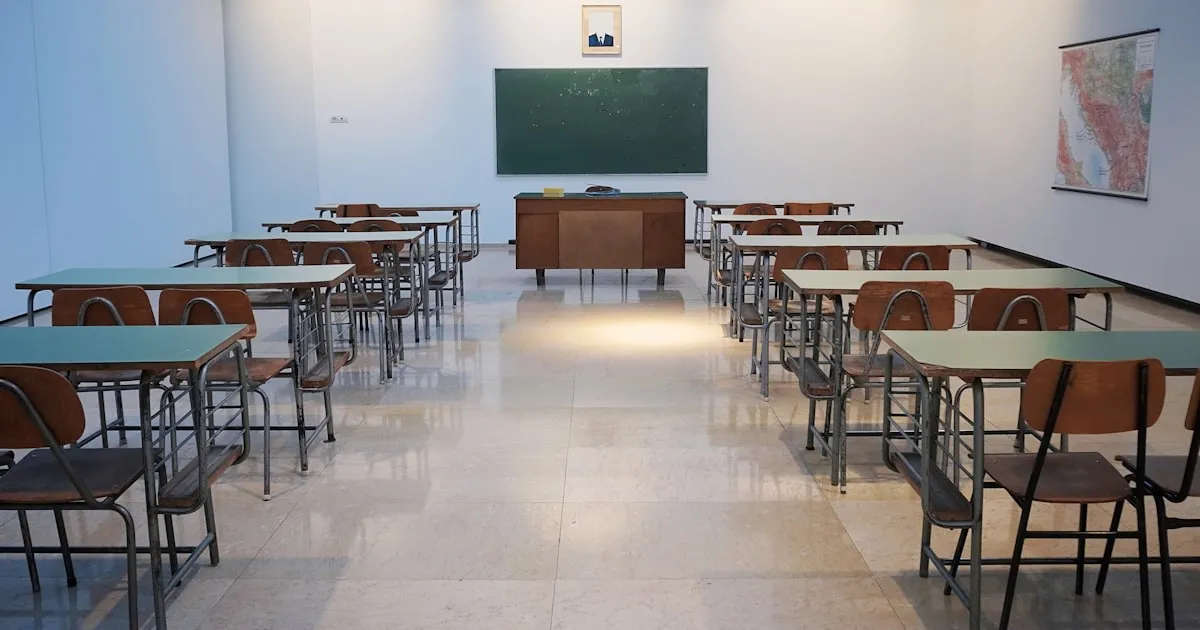
On a K-12 campus the people you protect are the client, not the risk. A school security officer who reads a hallway full of teenagers as a crowd to control makes the building less safe and is gone by spring. Same uniform, different job.
School security work runs on four things: access control tight enough to keep the visitor entrance the only way in, emergency procedures the officer knows cold, relationships with students good enough that they tell you things, and a clear line into the school's threat assessment team. Officers need training built for adolescents, not a general guard card and good intentions.
How common is security staffing in schools?
Common enough that most campuses have thought about it. Federal data for 2021-22 shows 61 percent of public schools with security staff present at least once a week, alongside 97 percent using controlled access during school hours and 93 percent running security cameras.
What those numbers do not tell you is which of those campuses have security that works. Controlled access with a propped side door is not controlled access. That gap is where this job actually lives.
What makes a school post different?
Five things, and each one changes what an officer may do.
- The people you are protecting are minors. They carry legal protections that shape search, detention, questioning and physical contact. What is routine at a warehouse gate is a lawsuit at a middle school.
- The environment has a job to do. A security measure that stops the building teaching has defeated itself. Nobody thanks you for a lockdown-shaped school.
- Everything is public. Parents, the board, the local paper. A decision made in four seconds gets discussed for four weeks.
- Relationships outperform enforcement. The tip that prevents an incident comes from a student who decided you were worth telling. There is no procedural substitute for that.
- There is a handoff. Serious incidents belong to police. Knowing exactly where your authority ends is part of the job, not a limitation on it.
What does access control look like on a campus?
One way in during school hours, and everything else is enforcement of that sentence.
The visitor entrance
- Every visitor through a single point, screened before they are past the office.
- ID checked and recorded, with background screening where the district's system supports it.
- A badge that stays visible, so any adult in a corridor without one is obvious at a glance.
- Regular volunteers screened properly. A weekly reading helper has more access than most contractors.
- Sign-out as well as sign-in, so you know who is still in the building at dismissal.
The clipboard version of this fails on the third busy morning. A written visitor management procedure and a system that logs the entry beat a book that nobody reconciles.
The perimeter
Exterior doors locked during school hours, checked on a round rather than assumed. Propped doors are the most common failure and they are almost always propped by staff, at the same three doors. Walk them, log them, and take the pattern to the principal rather than the individual.
Parking lots and playgrounds sit outside the locked shell and generate a disproportionate share of incidents, so fence lines and gates need looking at on a schedule. A site security assessment gives you the structured version, and CISA's K-12 School Security Guide and its assessment tool give districts a free methodology built for this.
Arrival and dismissal
The two windows where the whole population is in motion and the controls are down.
- Traffic management, because a congested pickup line is a safety problem before it is an access problem.
- Bus loading zones, including who is driving.
- Pickup verification. Custody disputes and protection orders make this the highest-stakes routine check on the campus.
- Pedestrian routes, where students meet traffic that is in a hurry.
What does the officer have to be ready for?
Ranked by how often it happens, which is roughly the inverse of how much attention each one gets.
Medical emergencies come first because they are the ones you will actually see. Know where every AED in the building is without thinking. Hold current CPR and first aid. Know the anaphylaxis protocol and where the epinephrine is kept. Know which students have a plan on file.
Mental health crises are close behind and are handled badly more often than anything else here. A student in distress is not a compliance problem, and the enforcement reflex makes it worse. Hospital teams have gone deeper on this than most school programs, and what they learned about de-escalation transfers directly.
Drills are how the rest becomes automatic. Lockdown, fire, evacuation, shelter-in-place, and reunification, which districts practice least and need most. Reunification is a verification problem under load: hundreds of frightened parents, and no child leaving with the wrong adult.
Active threat response requires knowing the school's emergency operations plan in detail: every evacuation route, every rally point, the communication protocol, and the point at which the incident belongs to the responding agency. ICS for security teams covers that structure, and an emergency response quick reference is what an officer can carry.
How should officers deal with students?
Learn names. That is not a soft recommendation, it is the mechanism the whole prevention side runs on.
A student who thinks you are a fixture with a radio tells you nothing. A student who thinks you are a person tells you somebody brought something to school. Being at the game on Friday and listening to a complaint that is not a security matter is the work, and it pays out in information nothing else gets you.
On intervention, the order is fixed:
- De-escalate. Adolescents escalate to match you, so a confrontational posture guarantees a confrontation.
- Read the behavior against the age. Boundary-pushing at fifteen is developmental, not defiance aimed at you.
- Route it through school discipline, not the criminal justice system. A school has consequences of its own and they are usually the right ones.
- Bring in staff who know the student. The teacher or counselor has context you do not.
- Document what happened, factually, that day. Writing incident reports people read covers how.
Physical intervention with a student should be rare and governed by written protocol. Improper handling injures children, ends careers and lands liability on the district and the contractor together. Most situations resolve without contact when the four steps above are followed. Know your district's restraint policy and your company's, and know which is stricter.
Some students need a different approach entirely. A disability can make proximity, noise or an authority voice read as non-compliance when it is not. English learners need the instruction given another way, not louder. Know which students have behavior intervention plans on file and what those plans say.
What is the officer's role in threat assessment?
To observe and report accurately into a process run by other people. Not to investigate.
The Secret Service's National Threat Assessment Center publishes the operational reference, Enhancing School Safety Using a Threat Assessment Model. If your campus has a threat assessment team, its method almost certainly traces back to that work. Read it so you know what your report feeds into.
What officers are positioned to notice:
- Threatening statements or writing, including the ones delivered as a joke
- An abrupt change in behavior, appearance or attendance
- Repeated fixation on weapons or on violence itself
- Withdrawal and isolation, which carries risk in both directions
- Bullying, on either side of it
Then four rules. Report promptly to the named team, erring toward reporting. Write what you saw and heard, not what you concluded. Run no inquiry of your own, because an amateur investigation contaminates a professional one. Keep it confidential.
Who does the officer answer to?
More people than on any other post, which is why the relationships have to be built before they are needed.
Administration. Regular contact with the principal so security knows what is coming: the assembly, the expulsion hearing, the parent told to stay away. A defined chain of command so nobody is deciding who decides mid-incident.
The School Resource Officer, where there is one. An SRO is sworn law enforcement with arrest authority. A contract security officer is not. Confusing the two is how a private guard does something they had no power to do. Define the split in writing and rehearse the handoff.
Teachers and staff. They see the campus all day and tell an officer they trust things they will not put in an email. Know their names too.
All of it belongs in the post orders rather than in one veteran officer's memory, because that officer will eventually be off sick on the wrong Tuesday. Writing post orders that work covers the format.
What training does this post actually require?
A guard card qualifies somebody to stand at a gate. It does not qualify them for a hallway.
If you are bidding school work, that list is your proposal, and it is the honest reason school contracts should not be priced like retail ones. Building the training program covers how to stand it up, and the same thinking carries over to church security planning.
Key Takeaways
- Most schools already run controlled access and cameras. The gap is enforcement, especially propped doors.
- Students are minors with legal protections. What is routine on a commercial post can be unlawful here.
- Medical and mental health calls outnumber security threats. Train for the frequent thing.
- Relationships with students are the prevention mechanism, not a nice extra.
- Officers observe and report into the threat assessment team. They do not investigate.
Continue Reading

Retail loss prevention strategies that work
What the NRF shrink numbers actually say, and the floor layout, exception reporting, officer training and outside partnerships that answer retail theft.
Security escalation matrix template: who to call
A security escalation matrix template with four severity levels, notification times, named backups and call sequences for medical, fire and active threat.
Site security assessment checklist: 101 points
A 101-point site security assessment checklist covering perimeter, access control, cameras, fire safety and operations, plus how to rank what you find.