Lone worker check-ins: intervals and escalation
Welfare check-ins for lone workers: set the interval from the real hazard, route the escalation to a named person, and test it before you rely on it.

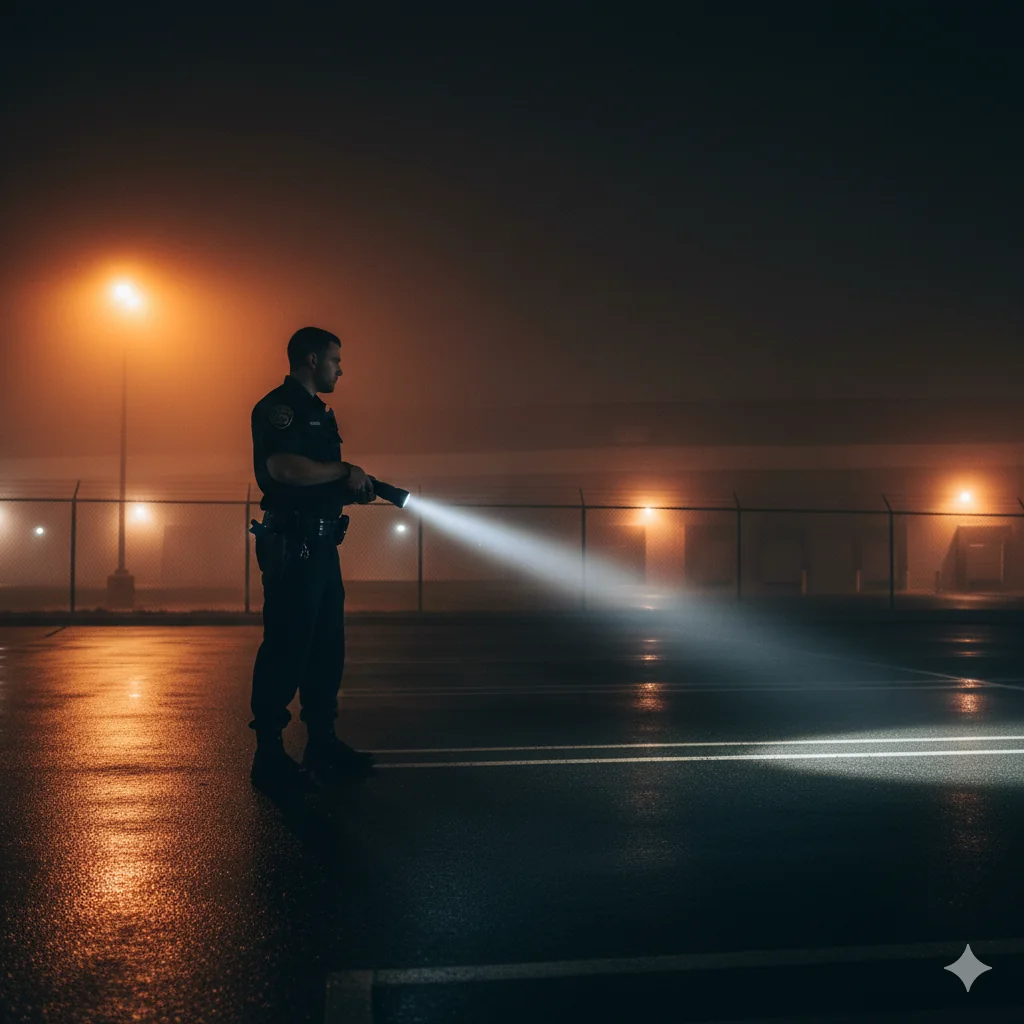
A guard goes down at 3am in a building that closed at six. Nobody is coming until the day shift badges in at seven. A welfare check-in is the only thing that turns those four silent hours into a phone call.
A welfare check-in asks a lone worker to confirm they are okay at a set interval, and escalates to a named human when the confirmation does not arrive. Set the interval from how long the person could lie there before it is too late, not from a template. Then test the escalation, because an alert that reaches an unstaffed phone is the same as no alert at all.
Who is actually working alone?
More of your roster than you think. The overnight at a building that closes at six. The remote site forty minutes from the nearest patrol unit. The middle stretch of a route that runs through a loading dock, a stairwell and a roof, none of which have anyone else in them.
The hazard is not that something happens. It is that a fall, a cardiac event or an assault removes the person's ability to call for help at exactly the moment they need it, and there is nobody in the room to call on their behalf.
Does the law require welfare checks?
In the United States, there is no general OSHA standard that says "check on your lone workers every N minutes." What applies almost everywhere is the general duty clause, section 5(a)(1) of the OSH Act, which requires an employer to furnish employment and a place of employment "free from recognized hazards that are causing or are likely to cause death or serious physical harm." An unmonitored lone overnight post is a recognized hazard once you have written a procedure that admits it is one.
OSHA does spell it out in one industry. For shipyard employment, 29 CFR 1915.84 requires the employer to account for an employee working alone "throughout each workshift at regular intervals appropriate to the job assignment," and again at the end of the assignment or shift, whichever comes first. Note how it says accounting has to happen: "by sight or verbal communication."
That last phrase is worth borrowing even if you never touch a shipyard. A tap on a button proves a thumb worked. It does not prove the person is upright, oriented or alone by choice.
How does a check-in actually run?
The mechanics are boring, which is the point.
- The app prompts the guard that a check-in is due.
- The guard confirms. One tap for a routine check.
- No response inside the window means a second and third prompt, louder each time.
- Grace period expires with still no response, and the supervisor gets an alert carrying the guard's last known position.
- A human calls, then sends someone. Usually both, in that order, without waiting to see if the call is answered.
Step five is where systems fail. The first four are software. The fifth is a person who has to be awake, reachable and clear about what they are supposed to do at 0300, which is a scheduling and training problem rather than a product one. Write down who gets called, in what order, and who backs them up before you switch anything on.
How often should check-ins fire?
There is no published interval standard to point at, and any number you find in a vendor brochure is somebody's guess dressed up as a benchmark. Operators generally run roughly 15 to 30 minutes on high-hazard sites, 30 to 60 minutes on a standard overnight, and an hour or two on a quiet low-risk post. Treat that as how the trade talks, not as a finding.
Set yours by answering one question honestly for each post: how long can this person lie on this floor before the outcome changes? Then make the interval shorter than that. A construction site with open trenches and no cell coverage does not get the same number as a lobby desk in a staffed high-rise, and the fatigue curve on a long overnight argues for tightening the interval in the back half of the shift rather than keeping it flat.
Too frequent is its own failure. A prompt every ten minutes becomes background noise, and a guard who dismisses it reflexively is no safer than one who was never prompted. If you find yourself shortening the interval to feel better rather than because the hazard changed, you are building a habit of ignoring the thing.
Why do guards stop taking check-ins seriously?
Two reasons, and both are yours to fix.
The first is framing. If the check-in reads as attendance monitoring, guards treat it as attendance monitoring. It has to be obvious that this exists so that somebody comes looking, and the way you make it obvious is by keeping it to one tap. Demand a note and a photo every cycle and you have built a productivity tracker with a safety label on it, which is the same trust problem GPS rollouts run into.
The second is silence. If a guard misses a check-in and nothing happens, everyone on that account now knows the system is decoration. Respond to every miss, including the ones that turn out to be a dead battery or a bad signal. Especially those. The call that ends in "sorry, phone died" is the call that proves the system runs.
Where do check-ins sit next to SOS and man-down?
They catch different failures, which is why you need all three.
- SOS
- The guard recognises danger and triggers it. Fast, but requires a conscious person with a free hand.
- Man-down
- The phone detects an impact or a period of no motion. Catches the case where nobody could press anything.
- Welfare check-in
- Covers the long quiet stretch where nothing has triggered and nobody has asked. It is the only one of the three that produces an alert from the absence of an event.
Stacking them shortens the gap between the thing happening and someone starting to move, which is the only number in lone-worker safety that ends up mattering. TeamMap runs check-ins and the SOS button from the same mobile app, with lone-worker settings that set the interval per post. Man-down detection is a separate capability that TeamMap does not have, so if you want it, ask a vendor to demonstrate it on the handsets your officers carry.
How do you turn it on without it falling over?
Identify the posts first, by isolation rather than by client. A site with three guards on days and one on nights is a lone-worker site for eight hours a day.
Set the interval per post from the honest hazard, not from a company-wide default. Configure the escalation contact per site and per shift, and name a backup for each one. Then train both ends: guards on what the prompt is for, supervisors on what to do in the ninety seconds after an escalation lands.
Test the whole chain before it goes live. Have a guard deliberately miss a check-in on a real overnight and watch what happens. If the alert reaches a phone that is off, you have found the thing that would have failed silently in an actual emergency, and you found it on a night when nobody was hurt. Fold what you learn into the card supervisors keep next to the radio.
Key Takeaways
- No US standard sets a check-in interval. OSHA's general duty clause is what applies.
- Set the interval from how long the guard could be down before it matters, not from a default.
- One tap for a routine check. Notes and photos every cycle turn a safety tool into surveillance.
- Respond to every missed check-in, including the dead-battery ones. Silence teaches the roster to ignore it.
- Test the escalation chain on a real overnight before you rely on it.
Continue Reading

Night patrol best practices for overnight shifts
Night patrol best practices for fatigue, light discipline, solo response and check-ins, built on what OSHA measures about night shift risk.
Construction site security: the daily operating routine
The habits that hold a jobsite: one gate, a signed end-of-day check, randomized patrols with checkpoint proof, and a plan re-walked at every phase change.
Parking enforcement procedures for security officers
Parking enforcement procedures for security officers: where your authority ends, warnings and citations that survive appeal, tow rules and accessible spaces.